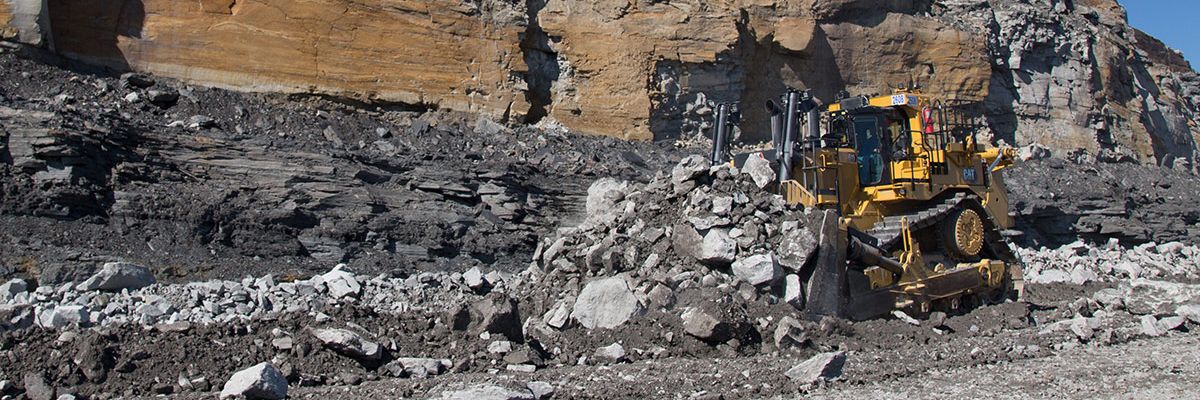
Caterpillar in DACH 2026: Market Leader with European Foundation
Caterpillar dominates the DACH construction machinery market in 2026 with an estimated market share of 27-29% in medium and heavy hydraulic excavators. This position is based on three pillars: the exclusive distribution partner Zeppelin Group with over 180 locations in Germany, Austria and Eastern Europe, a broad model range from 1.7 to 90 tons operating weight, and a resale value that is 15-18% above comparable Asian manufacturers. The strategic acquisition of the Dutch and Norwegian Pepp Group by Zeppelin in July 2025 expanded the distribution territory to two markets with combined annual sales of €620 million and strengthens the position against Liebherr, Volvo and Komatsu.
For purchasers and fleet managers, this market power means: stable spare parts availability within 24 hours for 94% of all components, comprehensive 24/7 service through 1,200 Zeppelin technicians, and high planning security through standardized maintenance intervals. At the same time, the monopoly position leads to limited room for negotiation – discounts typically remain below 8% for individual purchases, but reach 12-15% for framework agreements from five units.
Zeppelin Group: Exclusive Distribution with €4.44 Billion Revenue 2025
The Zeppelin Group from Garching near Munich has been the exclusive Caterpillar distributor for Germany, Austria, Czech Republic, Slovakia, Hungary, Romania, Bulgaria, Moldova, Armenia since 1954, and since July 2025 for the Netherlands and Norway. The 2025 financial year closed with €4.44 billion in revenue – an increase of 16% compared to €3.83 billion in 2024. This jump results from seven months of Pepp Group revenue and increased demand for telematics-enabled machinery.
The distribution structure is divided into three business divisions: Construction Machinery (58% of revenue), Rental (24%), and Power Systems (18% for engines and generators). In DACH, Zeppelin operates 62 sales and service branches in Germany, 8 in Austria, and 4 in Switzerland (the latter through a partnership with Avesco, not direct sales). Each branch carries on average 35-50 new machines as well as 80-120 used machines in inventory.
| Zeppelin DACH Metric 2025 | Value | Comparison 2024 |
|---|---|---|
| Construction Machinery Revenue DACH | €2.58 billion | +9% |
| New Machines Sold | 4,720 units | +6% |
| Service Technicians (D/A) | 1,240 | +80 |
| Spare Parts Storage (Line Items) | 124,000 | +3,200 |
| Average New Machine Delivery Time | 8-12 weeks | unchanged |
| Rental Fleet (Units) | 8,900 | +7% |
Service quality is considered the main differentiation feature: 92% of all service requests are answered within 4 hours, 87% of emergency operations reach the construction site within 6 hours. Zeppelin invests €18-22 million annually in technician training, including VR training centers in Hamburg, Munich and Vienna for hybrid drives and telematics diagnostics. From the operator's perspective, this competence justifies a price premium of 3-5% compared to direct CAT imports from neighboring countries.
Pepp Acquisition: Expansion into Northwestern Europe
The acquisition of the Pepp Group for an estimated €280-320 million in July 2025 brought 540 employees, 18 locations, and annual sales of €620 million into the group. Integration is proceeding on schedule: by Q2 2026, IT systems (DBS – Dealer Business System) and spare parts warehouses will be consolidated, cross-border deliveries between Germany and the Netherlands will reduce storage costs by an estimated €4.2 million annually. For DACH customers, this means expanded availability of Dutch specialty machines (e.g., CAT M320 mobile excavator for sewer renovation) without import formalities.
Caterpillar Model Range DACH 2026: From 1.7 to 90 Tons
The product range available for DACH in 2026 comprises a total of 87 model variants in seven product categories. The model designation follows the scheme: first digit = product category (3 = excavator, 9 = wheel loader), remaining digits = size class, suffix for generation (e.g., 320 GC = General Construction). Every machine is equipped ex-works with Cat Product Link (telematics) – standard without surcharge since 2024.
Hydraulic Excavators: Core Business with 14 Model Series
The excavator range starts with the 301.5 mini-excavator (1.7 t operating weight, 10.4 kW engine) for ground engineering contractors and extends to the 390 (90 t, 405 kW) for quarries and large construction sites. The best-selling class in DACH in 2026 is the 20-ton category (320/323) with 1,680 units annually – followed by 14-ton machines (314/315) with 1,250 units. This distribution reflects the structure of medium-sized earthmoving companies: 68% of fleets consist of machines between 12 and 24 tons.
| Model | Operating Weight (t) | Engine Power (kW/PS) | Bucket Capacity (m³) | Net List Price (€) |
|---|---|---|---|---|
| 301.5 | 1.7 | 10.4 / 14 | 0.04 | 34,500 |
| 308 CR | 8.2 | 43 / 58 | 0.34 | 94,200 |
| 314 GC | 14.8 | 82 / 111 | 0.66 | 142,800 |
| 320 (Next Gen) | 20.5 | 127 / 172 | 0.91 | 198,500 |
| 330 | 30.2 | 200 / 271 | 1.54 | 287,000 |
| 352 | 52.0 | 315 / 427 | 2.80 | 498,000 |
| 390 | 90.0 | 405 / 549 | 4.60 | 820,000 |
The Next Generation series (320, 323, 330, 336) with redesigned cab, 7-inch touchscreen, and 15% reduced fuel consumption has dominated sales figures since 2024. The CAT 320 2026 (production start January 2026) brings 8% more breakout force (147 kN versus 136 kN) compared to its predecessor, adaptive hydraulics with automatic power adjustment, and standard weighing equipment with ±1.5% accuracy. Consumption is 17.2 l/h diesel in the standard cycle (ECO mode: 14.8 l/h), which at 240 operating hours monthly equals 3,840 liters and approximately €6,100 in fuel costs.
Wheel Loaders: From 906 Compact to 980 Mining
The wheel loader program comprises 18 models from 0.9 to 12.0 m³ bucket volume. The compact 906 has been available since May 2025 as the 906 Electric with 150 kWh battery – running time 6-8 hours in tailings operation, full charge in 90 minutes at a 150 kW charging station. Price: €168,000 (diesel equivalent: €112,000), at 2,000 operating hours annually, the additional costs pay for themselves after 4.2 years through saved fuel and maintenance costs.
The best-selling models in DACH in 2026 are:
- 938 M (2.3 m³ bucket, 110 kW): 840 units – standard machine for recycling yards and building material dealers
- 950 GC (3.2 m³, 150 kW): 620 units – versatile machine for gravel pits
- 972 M (4.4 m³, 205 kW): 380 units – quarries and large construction sites
Caterpillar advertises availability of 95% over 5 years for this class with scheduled maintenance every 500 hours. Practice data from Zeppelin fleet contracts confirm 93.8% average availability – downtime is caused 62% by third-party negligence (damaged hydraulic lines, operator error).
Other Categories: Graders, Rollers, Dumpers
Graders are a niche in DACH with 180-220 units sold annually, dominated by the 140 M (93 kW, 3.7 m blade width) for municipal winter services and road construction. Caterpillar holds 41% market share here ahead of John Deere (28%) and Volvo (19%).
Rollers: The portfolio comprises 14 models from 1.5 t (CB1.7) to 25 t (CS78B Padfoot). Strength is the vibration technology with variable frequencies 28-67 Hz and amplitudes 0.35-2.1 mm. The CS56B (11 t, two vibration rollers) costs €148,000 and is considered the benchmark for asphalt compaction with 98% Proctor density in three passes.
Rigid Dumpers: The 772 (41 t payload) and 777 (91 t) models are primarily used in mining. DACH sales figures are below 50 units annually, as Liebherr mining trucks (T264, T284) are preferred in this class.
Market Shares DACH 2026: CAT Leads Ahead of Liebherr and Volvo
The DACH construction machinery market comprises an estimated 18,200 units sold in 2026 (hydraulic excavators over 6 t, wheel loaders over 1 m³), of which 11,400 in Germany, 3,100 in Austria, and 3,700 in Switzerland. Caterpillar ranks first with 4,950 units (27.2%), followed by Liebherr with 3,820 units (21.0%) and Volvo CE with 2,910 units (16.0%). Komatsu reaches 2,380 units (13.1%), JCB 1,640 (9.0%), Hitachi 1,100 (6.0%). The remaining 13.7% is distributed among Doosan, Hyundai, Sany, Hidromek, and others.
| Manufacturer | Units Sold 2026 | Market Share (%) | Average Selling Price (€) | Revenue Share (%) |
|---|---|---|---|---|
| Caterpillar | 4,950 | 27.2 | 186,000 | 29.8 |
| Liebherr | 3,820 | 21.0 | 194,000 | 24.0 |
| Volvo CE | 2,910 | 16.0 | 172,000 | 16.2 |
| Komatsu | 2,380 | 13.1 | 168,000 | 12.9 |
| JCB | 1,640 | 9.0 | 142,000 | 7.5 |
| Hitachi | 1,100 | 6.0 | 158,000 | 5.6 |
| Other | 2,500 | 13.7 | 124,000 | 10.0 |
Noteworthy: Caterpillar dominates in medium excavators (14-30 t) with 34% share, while Liebherr leads in heavy machines (50 t and over) and wheel loaders (6 m³ and above). Volvo excels in compact loaders and articulated trucks, JCB in telescopic handlers and compact excavators. This segmentation explains why many large fleets use two brands: CAT for standard excavators, Liebherr for specialty machines.
Regional Differences Within DACH
In Germany, Caterpillar has a 28.4% market share, in Austria 24.1%, and in Switzerland 22.8%. The decline in AT/CH correlates with stronger Liebherr presence – the manufacturer from Biberach/Bulle enjoys a home advantage. Zeppelin compensates for this with shorter service times: in Bavaria and Baden-Württemberg, technicians reach 91% of construction sites within 3 hours, in Vorarlberg and Graubünden only 76%.
Strengths and Weaknesses from the Buyer's Perspective
Construction companies with CAT fleets cite the following main reasons for brand loyalty (Zeppelin survey 2025, n=1,240):
- Service Density (82% approval): Zeppelin locations every 35-50 km in urban areas, technicians with specialized tools for all models since 1995
- Spare Parts Availability (79%): 94% of top 500 parts available within 24 hours, even for 15-year-old machines
- Resale Value (71%): CAT 320 with 5,000 operating hours achieves 52-58% of purchase price after 5 years, Komatsu PC210 only 46-51%
- Telematics (68%): VisionLink data enables preventive maintenance, reduces unplanned downtime by 22%
Weaknesses cited include:
- Purchase Price (64% criticism): 8-12% premium compared to Komatsu/Doosan in same weight class
- Fuel Consumption (41%): CAT 320 consumes 17.2 l/h, Volvo EC220E only 15.8 l/h (both in ECO mode)
- Complexity (38%): Electronic equipment requires training, older operators prefer mechanical controls
- Negotiation Flexibility (34%): Zeppelin rarely grants more than 8% discount on individual purchases
Cost Comparison: CAT 320 vs. Volvo EC220E Over 5 Years
| Cost Item | CAT 320 (€) | Volvo EC220E (€) | Difference |
|---|---|---|---|
| Purchase Price (net) | 198,500 | 184,200 | +14,300 |
| Fuel (12,000 h at €1.58/l) | 325,900 | 299,300 | +26,600 |
| Maintenance/Wear | 84,200 | 88,600 | -4,400 |
| Repairs (unplanned) | 18,400 | 22,800 | -4,400 |
| Insurance | 12,600 | 11,800 | +800 |
| Residual Value (after 5 years) | -108,700 | -89,400 | -19,300 |
| Total Cost 5 Years | 530,900 | 517,300 | +13,600 |
| Cost per Operating Hour | 44.24 | 43.11 | +1.13 |
The Caterpillar is €13,600 more expensive over 5 years, mainly due to higher consumption. High-utilization users (over 2,500 h/year) therefore often prefer Volvo or Komatsu. Low-utilization users (under 1,200 h/year) benefit from the higher CAT residual value, which partially offsets the higher costs.
CAT VisionLink: Telematics Standard with Added Value
Since model year 2024, Product Link (hardware) and VisionLink (cloud platform) are standard equipment on all CAT machines from 301.5 and up. The system captures over 120 operating parameters: GPS position, engine load, hydraulic temperature, fuel consumption, error codes. Data is transmitted every 60 seconds via LTE and stored for 7 years.
Key functions for fleet managers:
- Deployment Planning: Live map shows all machines, filter function by utilization (idle marked in red from 20%)
- Geo-Fencing: Alarm when leaving defined construction site perimeter, theft protection through remote shutdown (available since 2025)
- Maintenance Forecast: Algorithm calculates wear score 0-100, recommends service starting at score 75 – reduces downtime by 18% according to Zeppelin
- Consumption Analysis: Comparison between machines of same type, identification of fuel waste (e.g., excessive idle)
- Operator Rating: Scoring based on efficiency criteria (smooth braking, optimal RPM), basis for training needs
License costs: Basic package (position, operating hours, error codes) free for lifetime. Premium package (consumption analysis, operator scoring, API access) costs €18/month/machine or €180/year with prepayment. Enterprise package for fleets of 50+ machines: negotiable, typically €12-14/month with multi-year contract.
Comparison to Liebherr LiDAT and Volvo CareTrack
| Function | CAT VisionLink | Liebherr LiDAT | Volvo CareTrack |
|---|---|---|---|
| Basic Access | Free | Free | 1 year free, then €120/year |
| Update Interval | 60 seconds | 120 seconds | 300 seconds |
| Data Storage | 7 years | 5 years | 3 years |
| API Interface | Yes (Premium) | Yes (from 10 machines) | No |
| Remote Diagnostics | Yes, by Zeppelin technician | Yes | Limited |
| Geo-Fencing/Theft Protection | Yes, with remote shutdown | Geo-Fencing, no shutdown | Geo-Fencing |
Caterpillar excels with the longest data retention and remote shutdown – relevant for rental companies. Liebherr offers better integration into construction site management systems through open API already in the standard. Volvo lags in feature scope, but basic functions are cheaper after the first year.
Practical benefits according to Zeppelin customer survey: 78% of operations with more than 10 CAT machines actively use VisionLink, 52% have reduced fuel costs by 6-11% as a result, 41% reduced unplanned downtime by more than 15%. Main obstacle for non-users: lack of IT competence in smaller operations.
Factory Modernization and Manufacturing in Europe
Caterpillar operates five construction machinery production facilities in Europe in 2026: Gosselies/Belgium (hydraulic excavators 6-50 t), Desford/UK (compact excavators, compact loaders), Grenoble/