Introduction — DACH Market Overview 2026
The construction machinery market in Germany, Austria, and Switzerland is undergoing a phase of structural changes in 2026. After the sales decline in 2025, demand stabilizes at a level of approximately 18.4 billion euros in total revenue across the DACH region. This represents a decline of 6.2 percent compared to the record year 2022, but a slight recovery of 2.8 percent compared to 2025.
Germany accounts for approximately 71 percent of the regional market with 13.1 billion euros, followed by Switzerland with 3.2 billion euros and Austria with 2.1 billion euros. The market structure shows clear consolidation tendencies: the five largest providers account for 62 percent of sales in the earthmoving machinery segment, while the compact equipment segment under 6 tons shows a significantly more fragmented structure with over 40 active brands.
Three developments particularly characterize 2026: accelerated consolidation through Asian manufacturers, the shift from purchase to rental with a rental share of now 38 percent for new investments, and extended delivery times averaging 11.2 months for mid-size excavators in the 20-ton class. Electrification and telematics are no longer differentiating features but standard requirements in tenders for contract values above 500,000 euros.
Market Size and Growth 2026: Germany, Austria, Switzerland
The German construction machinery market reaches a sales volume of approximately 38,200 units for earthmoving equipment over 6 tons in 2026. This represents a decline of 4.1 percent compared to 2025, but well above the low point of 2020 with only 31,400 units. Revenue stands at 13.1 billion euros, with 8.7 billion for new machines and 4.4 billion for used machines, service, and spare parts.
In Austria, approximately 4,800 earthmoving machines over 6 tons are sold in 2026, generating revenue of 2.1 billion euros. Switzerland records 5,200 units despite smaller construction volume and 3.2 billion euros in revenue, due to higher revenue per unit resulting from stricter emissions requirements and a higher proportion of premium machines with Stage-V-Plus engines and hybrid drives.
The segment distribution in the DACH region in 2026 shows the following structure: earthmoving machinery 44 percent, road construction equipment 18 percent, material handling and cranes 16 percent, concrete equipment 12 percent, compact equipment under 6 tons 10 percent. The share of electric and hybrid drives is 14 percent for mini-excavators under 5 tons, but only 3.2 percent for larger machines.
Growth drivers are infrastructure projects such as the Germany-wide rail network (Deutschlandtakt) with an investment volume of 2.8 billion euros in 2026, wind power expansion with 1,900 new installations across DACH, and renovation with a share of 58 percent of total building construction volume. Headwinds come from residential construction with minus 22 percent building permits in 2025 and restrictive credit lending for project financing over 10 million euros.
Top-10 Manufacturers in the DACH Market 2026
Market leadership in the DACH region in 2026 is clearly distributed, though with significant shifts compared to 2020. Caterpillar holds the top position with 16.8 percent market share for earthmoving machinery over 10 tons, followed by Liebherr with 14.2 percent and Volvo Construction Equipment with 11.9 percent. In the compact segment under 6 tons, JCB dominates with 18.4 percent, Wacker Neuson with 12.7 percent, and Mecalac with 8.3 percent.
| Rank | Manufacturer | Total Market Share (%) | Strongest Segment | Units Sold DACH | Revenue Million € |
|---|---|---|---|---|---|
| 1 | Caterpillar | 14.2 | Excavator 20-50t | 6,840 | 2,410 |
| 2 | Liebherr | 12.8 | Cranes, Excavator >30t | 6,150 | 2,180 |
| 3 | Volvo CE | 10.4 | Wheel loader, Dumper | 5,010 | 1,770 |
| 4 | JCB | 9.7 | Compact excavator, Telescopic loader | 4,660 | 1,310 |
| 5 | Komatsu | 8.3 | Excavator 15-30t | 3,990 | 1,420 |
| 6 | Wacker Neuson | 6.8 | Compact equipment <3t | 3,270 | 890 |
| 7 | Hitachi (ZX Series) | 5.9 | Excavator 18-35t | 2,840 | 1,020 |
| 8 | Doosan Bobcat | 5.2 | Compact loader, Mini excavator | 2,500 | 680 |
| 9 | Sany | 4.1 | Excavator 12-22t | 1,970 | 540 |
| 10 | XCMG | 3.4 | Wheel loader, Rollers | 1,630 | 470 |
Caterpillar particularly benefits in 2026 from major projects in earthwork and mining, where the Cat 336 and Cat 374 models dominate with over 1,200 sold units each. Liebherr scores with the R 9XX series for earthmoving and absolute market leadership in crawler cranes over 300 tons capacity with a 67 percent share in this segment.
Volvo is increasingly focusing on the ECR series with electric compact excavators in 2026 and achieves a 22 percent market share in the 5 to 8 ton electric segment. JCB is expanding its leadership in telescopic handlers with the Loadall series and achieves 41 percent market share in rotating telescopic handlers over 3.5 tons payload.
Notable is the rise of Sany and XCMG. While both held only 3.2 percent combined market share in 2020, this has grown to 7.5 percent by 2026. Sany sells the SY215 series with over 840 units and positions itself as a price-performance alternative to established brands for municipal clients and mid-sized construction companies with fleets of 15 to 60 machines.
Consolidation 2025-2026: Acquisitions, Joint Ventures, Market Entries
The consolidation wave in the construction machinery market is accelerating massively in 2025-2026. A total of 23 relevant acquisitions, mergers, or strategic partnerships with an estimated total transaction volume of 4.7 billion euros have been recorded in the DACH region. This exceeds the 2020-2024 period with 31 transactions by 74 percent based on annual volume.
Most important development: Zeppelin Baumaschinen's acquisition of three regional Caterpillar dealers in southern Germany, through which Zeppelin expands its market share in distribution to 28 percent in Bavaria and Baden-Württemberg. Estimated transaction value 340 million euros. In parallel, Chinese manufacturer Sany acquires 60 percent of a former Volvo dealer in North Rhine-Westphalia with 18 locations to ensure service density for the growing Sany fleet.
Hidromek, a Turkish manufacturer focusing on 12 to 28-ton excavators, opens its own assembly plant in the Czech Republic in 2026 with planned capacity of 2,400 units per year for the DACH market. Simultaneously, a partner network with 34 service centers in Germany is being established. Market entry investment: estimated 87 million euros. The goal is a 3 percent market share by 2028.
In the rental sector, two mid-sized regional providers in Austria merge to form AVE Baumaschinen Rental with a fleet of now 3,800 units and estimated revenue of 180 million euros. This creates the fourth-largest rental provider in the DACH region after Boels, HKL, and Zeppelin Rental.
Wacker Neuson announces the relocation of production of compact excavators under 2.5 tons from China to Linz to reduce delivery times from 14 to 6 weeks. Investment volume 42 million euros, planned capacity 4,200 units starting Q3/2026. Mecalac is expanding the French plant with a line for electric compact loaders with 1,800 units annual capacity, planned production start Q1/2027.
Strategic partnerships: Starting in 2026, Liebherr and Wirtgen cooperate on telematics interfaces to allow central management of machine fleets of different brands. Volvo CE and Deutz are jointly developing a hydrogen-capable 6-cylinder engine with 230 kW for wheel loaders from 18 tons, series maturity planned 2028. Sennebogen expands its product portfolio with electric material handling equipment in cooperation with a battery system manufacturer, first prototypes with 320 kWh capacity will be tested with customers starting Q4/2026.
Delivery Times and Price Developments 2026
Delivery times for new machines have slightly eased in 2026 compared to 2025, but remain at historically high levels. A 20-ton crawler excavator from Caterpillar, Liebherr, or Komatsu currently shows a delivery time of 10 to 13 months from order. Compact excavators under 5 tons are available faster at 5 to 8 months, while large excavators over 40 tons with special equipment have waiting times of 15 to 18 months.
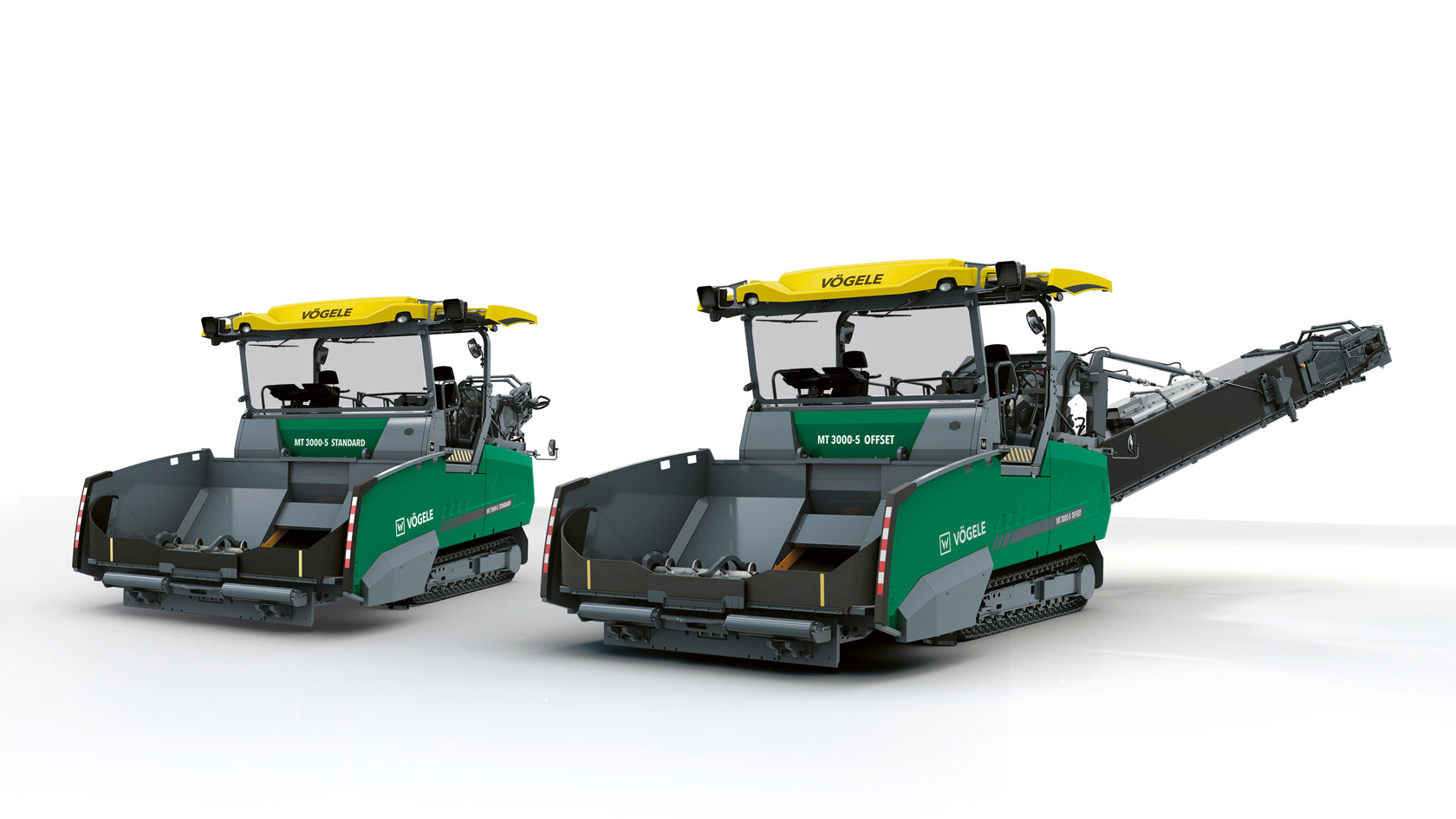
Wheel loaders in the 12 to 18-ton segment have delivery times of 8 to 11 months, telescopic handlers 6 to 9 months. Specialized road construction equipment such as pavers or stabilizers from Wirtgen show 12 to 16 months lead time. Mobile cranes over 100 tons from Liebherr or Tadano reach 14 to 20 months.
Main causes remain bottlenecks in hydraulic components, especially large cylinders over 250 mm diameter, and Stage-V engines in the 130 to 200 kW power range. Electronic controls and displays have been more readily available again since Q2/2026 after massive delays in 2024-2025. Steel prices have stabilized at 720 euros per ton, minus 8 percent compared to the peak in Q3/2022.
Price development shows a mixed picture in 2026. New machines have become on average 2.4 percent more expensive compared to 2025, mainly due to increased labor costs and expanded standard equipment such as telematics, camera systems, and hybrid functions. A Caterpillar 320 in standard configuration costs approximately 178,000 euros net in 2026, plus 3.8 percent compared to 2025. A Liebherr R 924 is 164,000 euros, plus 2.1 percent.
| Machine Type | Example Model | New Price 2026 (net €) | Change to 2025 | Delivery Time (Months) |
|---|---|---|---|---|
| Compact excavator 1.8t | Wacker Neuson 1404 | 28,400 | +1.9% | 6-7 |
| Mini excavator 5t | JCB 55Z-1 | 62,700 | +2.7% | 7-9 |
| Excavator 14t | Sany SY135 | 89,200 | -1.4% | 5-6 |
| Excavator 22t | Komatsu PC210LC-11 | 147,000 | +2.2% | 11-13 |
| Excavator 36t | Liebherr R 936 | 267,000 | +3.1% | |
| Wheel loader 14t | Volvo L90H | 132,000 | +2.8% | 9-11 |
| Telescopic handler 4t | JCB 535-95 | 87,500 | +1.7% | 7-8 |
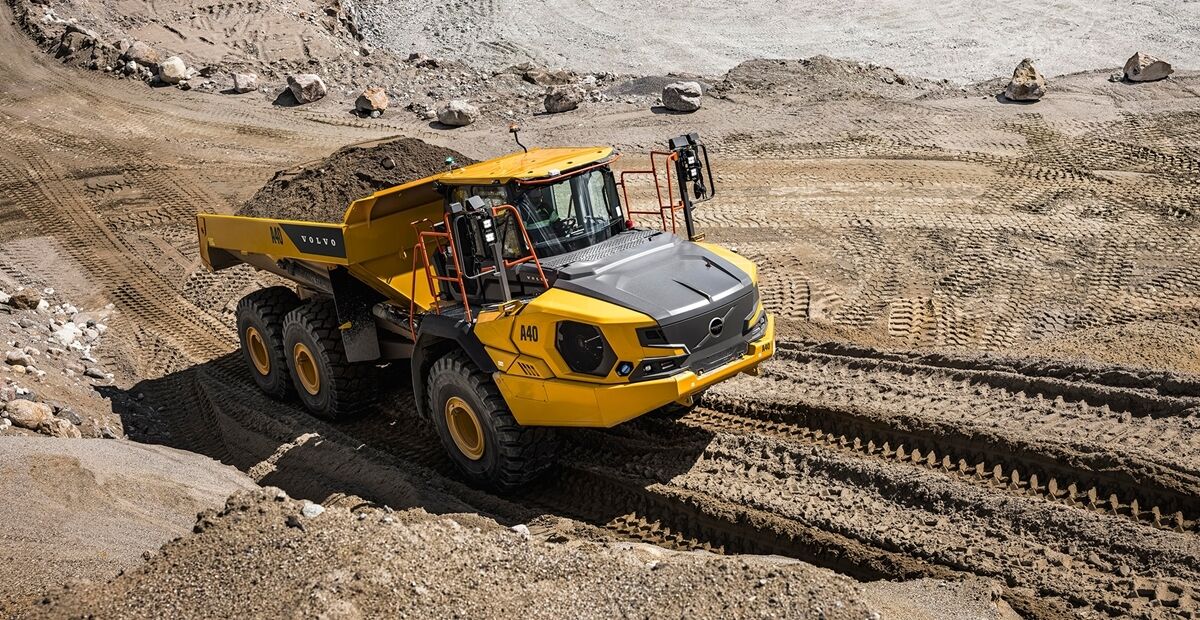
| Dumper 28t | Caterpillar 725 | 374,000 | +3.4% | 13-15 |
Prices develop in the opposite direction for Asian manufacturers. Sany and XCMG have reduced prices on average by 1.8 percent in 2026 to gain market share. A Sany SY135 (14-ton excavator) costs 89,200 euros, while a comparable Caterpillar 314 costs 118,000 euros. The price difference is thus 24 percent.
Used machinery prices show stabilization following the correction in 2024-2025. A 3-year-old Caterpillar 320 with 4,200 operating hours is traded at 68 to 74 percent of the new price in 2026, a 5-year-old with 7,800 hours at 52 to 58 percent. Compact excavators under 5 tons hold value better: 3 years old still 71 to 79 percent, due to high demand and shorter delivery times for new machines.
Rental Market 2026: HKL, Boels, Zeppelin Rental
The rental market for construction machinery in the DACH region reaches an estimated volume of 7.1 billion euros in 2026, a growth of 4.8 percent compared to 2025. The share of rental machines in the total equipment base deployed on construction sites is 41 percent, measured in machine hours. For compact equipment under 3 tons, the rental share is even 58 percent.
HKL Baumaschinen is the market leader with a fleet of approximately 48,000 units and 87 locations in Germany and Austria. Estimated 2026 revenue 1.34 billion euros. Boels Rental follows with approximately 41,000 units across DACH and revenue of 1.18 billion euros. Zeppelin Rental reaches 32,000 units and 980 million euros in revenue, but benefits from close integration with Caterpillar new machinery business.
The average rental duration in 2026 is 43 days per rental transaction, an increase of 6 days compared to 2024. This shows the trend toward longer-term rental contracts instead of short-term daily rentals. Large projects such as highway sections or wind farms often tie up machines for 180 to 280 days, while typical building construction projects show rental duration of 25 to 60 days.
Rental prices have stabilized in 2026 after increases in 2022-2024. A 20-ton excavator costs 340 to 420 euros per day depending on utilization and rental duration, 1,480 to 1,720 euros per week, 4,200 to 4,900 euros per month. Compact excavators 5 tons cost 170 to 210 euros per day, 720 to 880 euros per week, 2,100 to 2,600 euros per month. Wheel loaders 14 tons cost 280 to 360 euros per day, 1,240 to 1,540 euros per week.
Boels has invested more heavily in electric compact equipment in 2026 and operates 2,400 electric compact excavators, wheel loaders, and telescopic handlers. Surcharge to diesel variant: 8 to 12 percent in daily rate. HKL is testing hydrogen wheel loaders from Liebherr in rental operations in four regions, with 18 units currently in fleet testing.
The availability of rental machines is tight in 2026. For compact excavators 3 to 6 tons, average utilization is 76 percent, for large excavators over 30 tons 68 percent. Peak seasons in spring and fall lead to regional bottlenecks where lead times of 3 to 5 weeks are required for certain machine classes.
Asian Manufacturers' Advance in DACH
Chinese and other Asian manufacturers are gaining massively in significance in the DACH market. While Asian brands outside Japan held only 4.7 percent market share in 2018, this has already reached 11.3 percent by 2026. Main drivers are Sany, XCMG, Hidromek, and LiuGong.
Sany reaches estimated sales of approximately 1,970 units in the DACH region in 2026, a growth of 28 percent compared to 2025. The focus is on 12 to 24-ton excavators, where Sany scores with a price difference of 18 to 26 percent to western manufacturers. The SY215C series becomes Sany's best-selling individual model in the DACH region with over 840 units sold. Service coverage was expanded from 28 to 51 service centers in 2025-2026, spare part delivery within 48 hours for 87 percent of items.
XCMG focuses on wheel loaders, rollers, and road construction equipment. With 1,630 units sold in 2026 and a price difference of 21 to 29 percent, XCMG is gaining primarily among municipal operators and smaller construction companies. The XE215C excavator competes directly with Caterpillar 320 and Komatsu PC210, but is offered at 76,000 euros instead of 118,000 euros. Main customer argument: payback after 3.2 instead of 4.8 years at equal utilization.
Hidromek, a Turkish manufacturer with production facilities in Turkey and from 2026 in the Czech Republic, sells 890 units in the DACH region. Specialization in 14 to 28-ton excavators with European engines from Perkins and Cummins. Positioning between Asian budget suppliers and established western brands: price difference to Caterpillar 15 to 19 percent, but premium to Sany of 6 to 9 percent. Argument: EU production from 2027, shorter delivery times.
Quality perception of Asian manufacturers improves continuously. While in 2018 only 23 percent of surveyed construction companies rated Asian brands as "equivalent to western manufacturers," this has already reached 47 percent by 2026. Main remaining criticisms are resale value after 5 years (minus 12 to 18 percentage points) and service availability in rural regions.
LiuGong sells approximately 620 units in the DACH region in 2026, mainly 8 to 16-ton wheel loaders. Doosan, now Korean-American following acquisition by HD Hyundai, maintains stable 5.2 percent market share with the DX series. Hyundai Construction Equipment itself remains a smaller player at 2.8 percent, focusing on excavators over 35 tons for quarrying and mining.
Electrification and Alternative Drives 2026
Electrification in the construction machinery market is accelerating in 2026 but remains concentrated on compact equipment and specialized applications. The share of purely electric machines in total sales is 6.8 percent measured in units, and 2.1 percent measured in revenue, since primarily smaller, less expensive equipment is being electrified.
Electric drives reach 22 percent for compact excavators under 3 tons, 11 percent for 3 to 6 tons. Wacker Neuson sells approximately 1,840 electric compact excavators in 2026, JCB about 1,520, Volvo CE 980. Main arguments for electric: zero emissions in halls and city centers, 40 to 55 percent lower operating costs at 2,000 annual operating hours, noise reduction from 95 to 68 dB(A).
Battery capacities are typically 28 to 48 kWh for 2-ton excavators, 64 to 92 kWh for 5-ton excavators in 2026. Runtime under full load: 4.5 to 6.5 hours, under mixed load 6.5 to 8.5 hours. Charging time at 22-kW charger: 2.5 to 4 hours, at 50-kW fast charger 1.2 to 1.8 hours. Premium compared to diesel variant: 18,000 to 32,000 euros depending on model.
Hybrid drives dominate for larger machines over 10 tons. Komatsu sells the PC210LCi-11 Hybrid with 68 units sold across DACH, Caterpillar the 323 with electric drive and 92 units. Real fuel savings: 12 to 18 percent, premium 38,000 to 54,000 euros. Payback at 2,000 annual hours and 1.45 euros diesel price: 5.2 to 6.8 years.
Hydrogen drives remain in pilot stage in 2026. Liebherr is testing an H2 wheel loader R 580 with 230 kW fuel cell with four customers, Volvo an L120H hydrogen with two quarry operations. Main problems: H2 refueling infrastructure (only 140 public stations