Introduction — Wheel Loaders in the DACH Market 2026
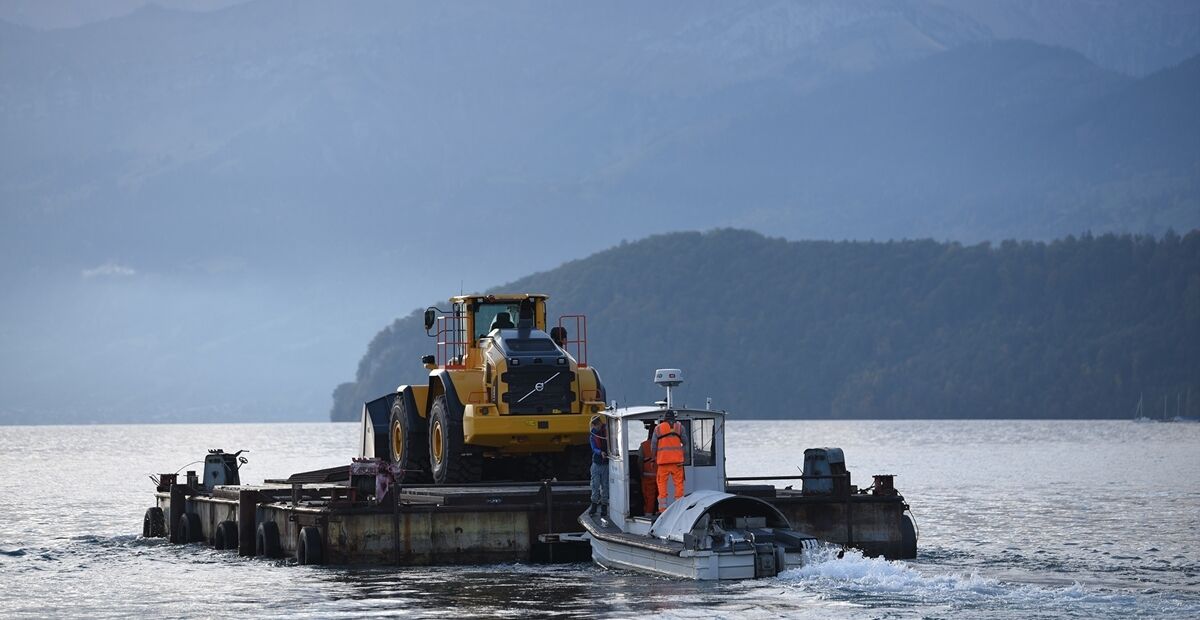
Wheel loaders remain the workhorses on construction sites, extraction operations, and recycling yards in German-speaking regions in 2026. The model range spans from 1.5-ton yard loaders to 50-ton heavy-duty machines for open-pit mining. Critical selection criteria include bucket volume, lift capacity, drive type, and application profile. While Caterpillar, Volvo CE, and Komatsu dominate the market for large machines, Wacker Neuson, Kramer, and JCB set standards in the compact segment.
The DACH market shows a clear trend in 2026 toward electrification in the compact sector and Stage V diesel engines with hybrid support for mid-range and heavy-duty models. Telematics and integrated weighing systems are no longer optional equipment but standard on new machines weighing 15 tons or more. The availability of fully automatic quick couplers reduces changeover times in multi-shift operations by up to 40 percent.
This article provides reliable comparison data for decision-makers: performance specifications, TCO calculations, application profiles, and safety aspects. All information is based on manufacturer specifications from Q1/2026 and is updated quarterly.
Class Overview: Yard Loaders, Compact, Mid-Range, Heavy-Duty
Wheel loaders can be divided into four main classes based on operating weight and bucket volume. The boundaries are fluid but established industry-wide:
| Class | Operating Weight | Bucket Volume | Engine Power | Typical Application | Example Models |
|---|---|---|---|---|---|
| Yard Loader | 1.5–3.0 t | 0.3–0.6 m³ | 15–35 kW | Agriculture, Municipal | Wacker Neuson WL20, Kramer 5055e |
| Compact | 3.0–8.0 t | 0.6–1.5 m³ | 35–75 kW | Earthwork, Horticulture, Recycling | JCB 411, Volvo L25 Electric, Caterpillar 906 |
| Mid-Range | 8.0–25.0 t | 1.5–4.5 m³ | 75–230 kW | Extraction Operation, Concrete Plant | Liebherr L 556 XPower, Volvo L120H, Cat 966 |
| Heavy-Duty | 25.0–50.0+ t | 4.5–12.0 m³ | 230–450 kW | Open-Pit Mining, Port Handling | Caterpillar 988, Komatsu WA600-8, Volvo L350H |
The compact class is growing fastest in 2026: electric models like the Volvo L25 Electric (55 kW, 1.2 m³ bucket) achieve market shares exceeding 20 percent in halls and emission-sensitive areas. In the mid-range segment, machines with 18–22 tons operating weight are becoming established—they combine sufficient throughput for large construction sites with transportability on standard lowboy trailers.
Heavy-duty machines from 40 tons remain specialists for extraction operations and port handling. Here, Caterpillar (988, 994), Komatsu (WA600-8, WA800), and Liebherr (L 586 XPower) dominate. Volvo CE offers the L350H (35 tons, 6.0 m³) as a bridging solution between mid-range and true heavy-duty machines.
Top Manufacturers in the DACH Wheel Loader Market 2026
Caterpillar: From 906 Compact Loader to 988 Heavy-Duty
Caterpillar covers the entire spectrum with 21 model lines. The 906 compact loader (6.2 t, 1.0 m³, 55 kW) sets standards for visibility and maneuverability. The 966 (23 t, 3.8–5.3 m³, 220 kW) has been the reference in the mid-range for decades—the current 966 GC variant reduces fuel consumption by 12 percent compared to its predecessors. The 988 (54 t, 8.4–11.5 m³, 455 kW Stage V) dominates large construction sites with 58 percent torque reserve and tipping load of 26.5 tons.
Cat Telematics VisionLink is standard as of 2026, integrated weighing systems (Production Measurement) from the 950 model onward. All Stage V engines meet EU emission standards without AdBlue additive through combined SCR and DPF technology.
Volvo CE: Electric Offensive and L-Series
Volvo CE positions itself in 2026 as an electric pioneer: L25 Electric (5.8 t, 55 kW, 1.2 m³) achieves 8 hours of continuous operation with 96-kWh battery, fast charging to 80 percent in 90 minutes. The diesel L-series (L60H to L350H) consistently uses OptiShift transmissions with load-dependent shift point optimization. The L120H (20 t, 2.6–4.2 m³, 173 kW) remains the best seller in earthwork—competitors are Caterpillar 962 and Liebherr L 556.
Volvo Co-Pilot telematics integrates geofencing, fleet management, and predictive maintenance. ROPS/FOPS cabs meet ISO 3471/3449 Level II. The L350H (35 t, 6.0 m³, 324 kW) offers optional high-lift bucket for 4.50 m discharge height—relevant for silo loading and truck loading over side walls.
Komatsu: WA-Series with SmartLoader Logic
Komatsu WA models (WA100 to WA800) combine Stage V diesel engines with hydrostatic drive (HST) from WA320 onward. The WA380-8 (17.5 t, 3.0 m³, 173 kW) competes directly with Volvo L120H and Cat 962—advantages lie in 10 percent lower fuel consumption (15.8 l/h in ECO mode) and maintenance-free wet clutches. The WA600-8 (42 t, 7.0 m³, 357 kW) sets standards for tipping load (27.8 t) and lift capacity (340 kN).
SmartLoader package includes automatic bucket positioning, load pressure management, and Eco-Guidance display. KOMTRAX telematics provides real-time data on fuel consumption, operating hours, and wear components.
Liebherr: XPower Efficiency and Stereo Steering
Liebherr focuses on mid-range and heavy-duty classes: L 556 XPower (20 t, 3.3–4.5 m³, 200 kW) uses XPower drivetrain with continuously variable hydrostatic transmission and energy recovery. Fuel savings compared to mechanical transmissions: 15–25 percent depending on application profile. The L 586 XPower (40 t, 7.0 m³, 390 kW) achieves tipping load of 28.2 tons—the highest value in its segment.
Liebherr stereo steering (parallel or Z-kinematics switchable) allows optimal adaptation to material and loading height. LiDAT telematics records bucket weight, driving cycles, and wear; data is transferred directly to fleet management via LTE.
JCB, Wacker Neuson, Kramer: Compact Specialists
JCB offers compact loaders in the 400 series (411, 419, 427) between 5.5 and 9.5 tons. The 411 (5.5 t, 1.0 m³, 55 kW) impresses with EcoMAX engine (Stage V without DPF through SCR-only) and standard quick coupler. JCB LiveLink telematics is free for five years.
Wacker Neuson fully integrates the Compact Machinery product line from 2026: WL series (WL20 to WL95) covers 1.5 to 8.5 tons. The WL60 (6.8 t, 1.2 m³, 65 kW) is available as electric variant WL60e (battery 70 kWh, 6 hours operation). Kramer four-wheel-drive loaders (5055e, 5085e) use identical electric platform—synergies reduce spare parts costs by 30 percent.
Hyundai and Chinese Manufacturers
Hyundai HL series (HL757, HL970) gains market share in price-sensitive segments. The HL970 (22 t, 3.8 m³, 208 kW) costs 15–20 percent less than comparable Volvo or Cat models with nearly identical performance data. Limitations: telematics only available as paid option, service network in DACH region less dense.
Chinese manufacturers such as Sany (SYL956, 18 t, 3.0 m³) and XCMG (LW500KV, 17 t, 3.0 m³) are primarily active in Eastern Europe; market penetration in Germany, Austria, and Switzerland under 5 percent.
Drive Trends 2026: Stage V, Hybrid, Battery-Powered Loaders
Stage V Diesel: SCR, DPF, and AdBlue-Free Solutions
All new machines from 56 kW (75 hp) must meet EU Stage V since January 2023. In 2026, two technical approaches are established: Caterpillar and Komatsu use combined SCR-DPF systems without AdBlue additive—urea is generated internally. Volvo CE, Liebherr, and JCB use SCR with AdBlue (consumption 3–5 percent of diesel consumption). DPF regeneration occurs automatically during operation; standstill times are eliminated.
Real fuel consumption (Y-cycle per ISO 14396) of selected mid-range models:
- Volvo L120H: 18.2 l/h (ECO mode 16.5 l/h)
- Caterpillar 966 GC: 19.8 l/h (ECO 17.9 l/h)
- Liebherr L 556 XPower: 15.4 l/h (XPower hydraulics 14.2 l/h)
- Komatsu WA380-8: 15.8 l/h (SmartLoader 14.6 l/h)
The differences result from transmission technology (hydrostatic vs. mechanical), engine management, and hydraulic efficiency. XPower and SmartLoader systems reduce consumption through energy recovery when lowering load by 8–12 percent.
Hybrid Wheel Loaders: Series Hybrid vs. Parallel Hybrid
Hybrid wheel loaders combine diesel engine with electric motor/generator. Two concepts exist:
Series Hybrid: Diesel engine drives generator, electric motor drives axles. Advantage: diesel engine runs in optimal RPM range, fuel savings up to 20 percent. Disadvantage: higher weight (additional 1.5–2.0 t), price premium 30,000–50,000 euros. Example: Volvo L120H hybrid concept (prototype, series production planned 2027).
Parallel Hybrid: Electric motor supports diesel engine at load peaks. Advantage: lower complexity, price premium 20,000–35,000 euros. Disadvantage: fuel savings only 8–12 percent. Example: Komatsu WA380-8 Hybrid (Japan market, DACH introduction open).
Hybrid models amortize in multi-shift operation (16+ hours/day) and diesel prices from 1.40 euros/liter within 4–5 years. In single-shift operation, the business case remains critical.
Battery-Powered Wheel Loaders: Application Profiles and Charging Infrastructure
Electric wheel loaders without internal combustion engines are production-ready in the compact class in 2026. Technical specifications of leading models:
| Model | Operating Weight | Engine Power | Battery Capacity | Operating Duration | Charge Time 0–80% | Price from |
|---|---|---|---|---|---|---|
| Volvo L25 Electric | 5.8 t | 55 kW | 96 kWh | 8 h | 90 min (DC) | €98,000 |
| Wacker Neuson WL60e | 6.8 t | 65 kW | 70 kWh | 6 h | 120 min (DC) | €89,000 |
| Kramer 5055e | 5.2 t | 50 kW | 64 kWh | 6 h | 110 min (DC) | €82,000 |
| JCB 525-60E Telehandler | 7.1 t | 60 kW | 80 kWh | 7 h | 100 min (DC) | €105,000 |
Advantages: zero emissions (relevant in halls, tunnels, inner-city construction sites), noise reduction by 15–20 dB(A), maintenance costs 40 percent lower (no oil changes, no exhaust system). Disadvantages: higher purchase price (+25–35 percent), charging infrastructure required (DC fast chargers from 50 kW cost 15,000–25,000 euros), range in multi-shift operation critical.
Optimal for: indoor recycling, concrete plants, horticulture, municipal operations with single-shift operation and own photovoltaic infrastructure. Less suitable for: extraction operations with 16+ hours continuous operation, mobile applications without charging infrastructure.
Buckets and Attachments: Quick Couplers, High-Lift Buckets
Quick Coupler Systems: Manufacturer Standards vs. ISO 23727
Quick couplers reduce changeover times from 15–20 minutes (manual bolt locking) to under 60 seconds. In 2026, three systems are relevant:
Proprietary Systems: Caterpillar Fusion, Volvo Quick Fit, Liebherr LIKUFIX—fully integrated, locking status displayed in cab. Compatible only with manufacturer attachments. Price: 4,500–7,500 euros upcharge ex-works.
Retrofit Systems per ISO 23727: Lehnhoff MS, OilQuick OQ, Steelwrist—manufacturer-independent, compatible with 90+ percent of all attachments. Retrofit: 8,000–12,000 euros including installation. Disadvantage: no CAN-bus integration, no cab display.
Fully Automatic Systems: OilQuick OQ80—hydraulic and electrical lines are automatically coupled. Relevant for grabs, brooms, spreaders with hydraulic or electrical connections. Price: 18,000–25,000 euros. Amortization with frequent attachment changes (daily 3+ changes) within 2 years.
High-Lift Buckets and Heavy-Duty Versions
High-lift buckets enable discharge heights of 4.00–5.50 meters—required for truck loading over side walls, silo filling, and container loading. Available from mid-range (18 t+). Lift capacity decreases due to extended kinematics by 12–18 percent; additional weight 400–800 kg reduces payload.
Examples:
- Volvo L120H with high-lift option: discharge height 4.20 m (standard 3.50 m), tipping load 16.8 t (standard 18.2 t)
- Caterpillar 966 GC high-lift: 4.45 m discharge height, tipping load 17.5 t (standard 19.2 t)
- Liebherr L 556 XPower high-lift: 4.60 m, tipping load 18.0 t (standard 20.1 t)
Heavy-duty buckets with wear protection (Hardox 450, wear strips) are standard in extraction operations. Volume decreases due to thicker sheets by 8–12 percent, weight increases by 15–25 percent. Service life extends by a factor of 2–3.
Special Attachments: Pallet Forks, Bale Grabs, Sweepers
Pallet forks with ISO tines (load capacity 2.5–6.0 t) extend the wheel loader to telehandler replacement. Relevant for building material dealers, warehouse logistics. Price: 3,500–6,500 euros.
Bale grabs (opening width 1.20–2.80 m) for agriculture and recycling. Hydraulically swiveling, load capacity 800–2,000 kg. Price: 4,200–8,500 euros.
Sweepers (working width 1.80–3.00 m) with hydraulic drive for municipal applications. Sweeping capacity 15,000–25,000 m²/h. Price: 5,500–11,000 euros.
Telematics and Weighing Systems
Fleet Management and Predictive Maintenance
Telematics systems are standard from mid-range (18 t+) in 2026. Data collection includes:
- Location (GPS, accuracy 2–5 m), geofencing alarms when leaving defined areas
- Operating hours (engine, transmission, hydraulics separately), idle times
- Fuel consumption (actual, not estimated), AdBlue level
- Error codes (engine control, hydraulics, transmission), service intervals
- Productivity (load cycles, bucket weights with integrated weighing system)
Leading systems: Caterpillar VisionLink (5 years free, then 35 euros/month/machine), Volvo Co-Pilot (3 years free, then 42 euros/month), Komatsu KOMTRAX (10 years free, then 28 euros/month), Liebherr LiDAT (3 years free, then 38 euros/month).
Predictive Maintenance uses algorithms to forecast failures: oil analysis (metal particles in engine and hydraulic oil), vibration analysis (bearings, transmission), temperature profiles. Manufacturers report: reduction of unplanned downtime by 25–35 percent, extension of service intervals by 10–15 percent.
Integrated Weighing Systems: Dynamic vs. Static
Weighing systems record bucket weight and sum daily performance. Two measuring principles:
Dynamic Systems: Pressure sensors in lift cylinders measure weight during lifting movement. Accuracy ±2–3 percent. Advantage: no delay in work process. Disadvantage: inaccuracy on sloped terrain, fluctuating material. Standard at Caterpillar (Production Measurement), Volvo (Volvo Care Cab), Komatsu (KOMTRAX Payload Meter). Ex-works upcharge: 3,500–5,500 euros.
Static Systems: Weighing with wheel loader stationary, bucket in defined position. Accuracy ±1 percent. Advantage: legally certifiable (relevant for building material dealers with sales billing). Disadvantage: 3–5 second time loss per cycle. Retrofit: 6,500–9,500 euros. Providers: RDS Technology, PFREUNDT.
Application case gravel pit: wheel loader loads 25-ton gravel truck. Dynamic system records 6 bucket loads (each 4.2 t ±130 kg), sum 25.2 t, deviation to weighing bridge +0.8 percent. Time savings vs. separate weighing: 4 minutes per truck. At 40 trucks/shift: 160 minutes = 2.7 hours productivity gain.
Application Profiles: Extraction, Earthwork, Recycling, Agriculture
Extraction Operations: Heavy-Duty for Open-Pit and Quarries
Requirements: high tipping load (20+ t), large bucket volumes (6–12 m³), robust wear protection equipment. Typical machines: Caterpillar 988 (54 t, 11.5 m³ rock bucket, tipping load 26.5 t), Komatsu WA600-8 (42 t, 7.0 m³, 27.8 t), Liebherr L 586 XPower (40 t, 7.0 m³, 28.2 t), Volvo L350H (35 t, 6.0 m³, 24.5 t).
Application case granite quarry: wheel loader loads 40-ton dump truck (payload 28 t) with coarse granite. Bucket volume 7.0 m³, material bulk weight 1.65 t/m³, theoretical bucket load 11.6 t. Practical fill 85 percent (spillage losses with coarse material): 9.9 t/load. Truck loading in 3 bucket loads, cycle time 45 seconds/load = 2.25 minutes total. Throughput: 26 trucks/hour at optimal workflow.
Critical wear components: bucket cutting edge (service life 800–1,200 operating hours with Hard