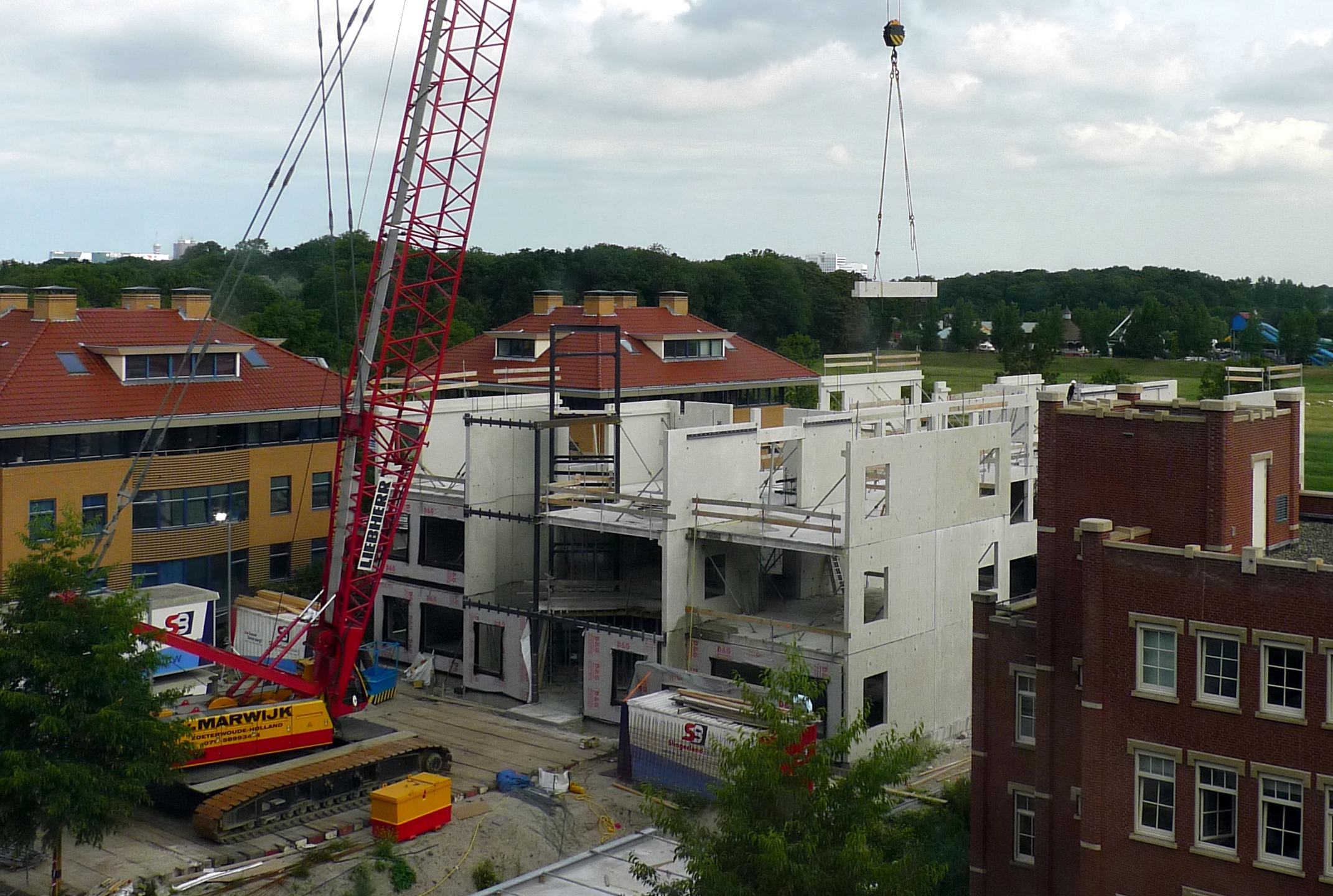
Liebherr was founded in 1949 by Hans Liebherr in Kirchdorf an der Iller in southern Germany. The founding idea was the development of the first mobile tower crane — a product tailored to the reconstruction needs of the post-war years, which later established the company as the global market leader in cranes. The official group headquarters was subsequently relocated to Switzerland; the operational history and most of the plants remain concentrated in Germany, particularly in the southern German region.
The company is in its second generation of family leadership. The president of the Administrative Board is Jan Liebherr, and the vice-president is Stéfanie Wohlfarth. This family stewardship is unusually stable in an industry shaped by activist-driven M&A, private-equity consolidation and shifting corporate strategies. For customers, suppliers and distribution partners, the family structure implies predictable, long-term investment and product decisions — not least in the current powertrain transition, where bets on individual technologies (battery-electric, hydrogen, hybrid) require 10+ year time horizons.
Liebherr currently employs around 54,728 people across more than 140 sites worldwide. The company thus ranks among the largest family businesses in Europe and among the top five global construction-equipment manufacturers. Revenue has grown from 11.75 billion EUR in 2019 to 14.62 billion EUR in 2024 — growth of more than 24 percent within five years, though 2020 saw a pandemic-driven dip to 10.34 billion EUR, followed by steady recovery.
What structurally sets Liebherr apart from most competitors is its exceptionally high vertical integration. Not only are the classic machine divisions (earthmoving, cranes, mining, concrete technology, maritime cranes, special foundation engineering) developed and manufactured in-house — the central components such as hydraulic systems, diesel engines (in Bulle in Switzerland and Colmar in France) and control electronics are also developed in-house. This depth provides the group with a cost advantage on standard machines and an innovation edge on complex systems, because powertrain, hydraulics and software can be developed in a coordinated way. At the same time, the group is significantly more diversified than pure construction-equipment competitors through its Aerospace division (landing gear and flight controls for Airbus and Boeing) and its home-appliance division.
Our editorial team covers Liebherr continuously and documents relevant market developments, product launches (bauma presentations, pre-series programmes, field tests) and strategic moves across 21 editorial articles. This profile page bundles the most B2B-relevant information into four thematic areas: Company, Financials & Brand, Portfolio & Sites (the eight business areas in detail), and Innovation & Trends (powertrain roadmaps, LiDAT/LiPOS digital strategy, hydrogen research, autonomous mining trucks).