Where electrification really stands in 2026
The construction industry in the DACH region finds itself at a crossroads in 2026. While manufacturers present electric machines at trade shows, diesel still dominates on construction sites. The truth lies somewhere in between: Electric construction machines are available in 2026, but their economic viability depends heavily on the application profile. A 1.7-ton mini excavator with battery power costs approximately 42,000 euros as an electric variant instead of 28,000 euros for diesel. At 8 hours of daily operating time and an electricity price of 0.35 euros per kWh, energy costs amount to around 4.20 euros – diesel would consume 18 to 22 euros for the same output.
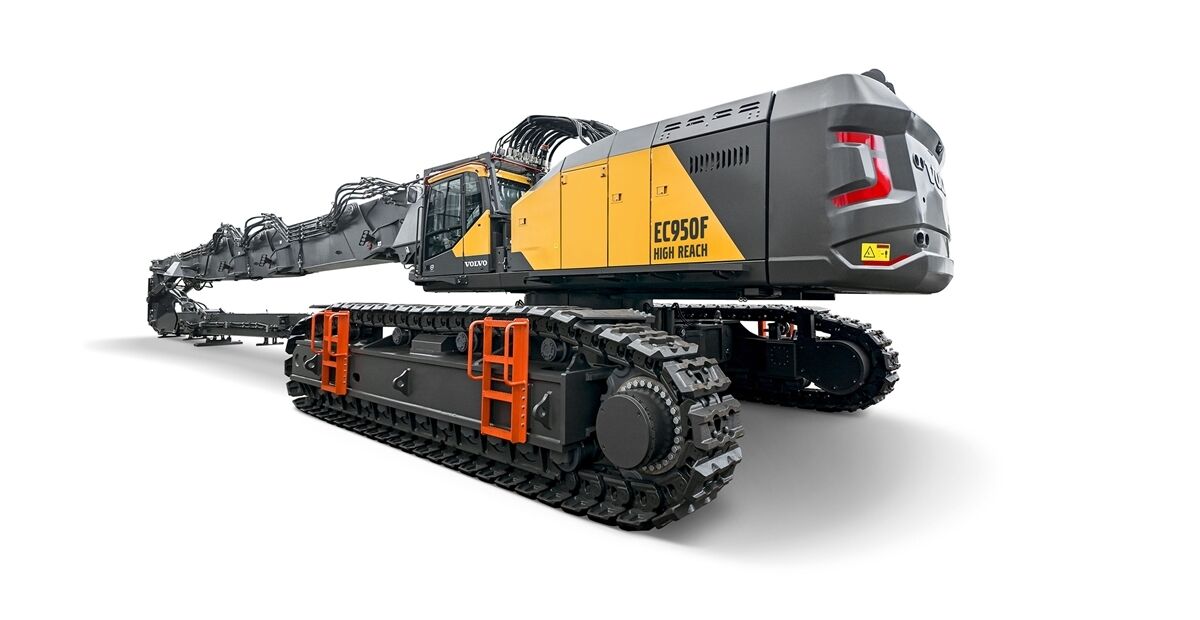
However, acquisition costs remain the biggest hurdle. Mecalac supplies the e12 electric excavator with 146 kWh battery capacity, Wacker Neuson now offers 23 zero-emission models, Volvo presented the EC230 Electric as a 23-ton machine – but unit numbers are manageable. In Germany, around 1,800 electric construction machines are in use in 2026, out of a total fleet of over 580,000 units. That corresponds to 0.3 percent. In Austria, the share is 0.4 percent, in Switzerland 0.6 percent, driven by stricter environmental regulations in city centers like Zurich and Geneva.
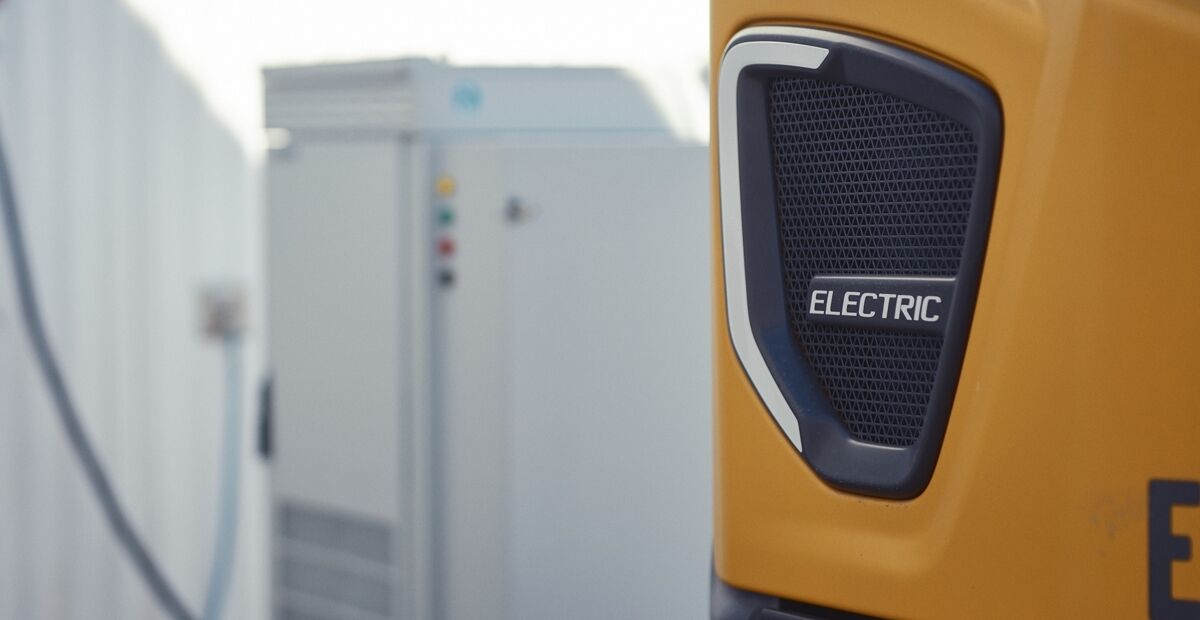
The reality on the construction site: Electric machines in 2026 are primarily suited for urban projects with fixed working hours, short cycles, and available electrical connections. Excavation work in residential areas, track work at night, demolition in city centers – here zero emissions and reduced noise exposure prove worthwhile. An electric excavator may be deployed in Zurich from 10 p.m. onwards, diesel cannot. This means additional productive hours that put the price premium into perspective. For earthwork on highway construction sites or in quarries, diesel remains the more economical choice in 2026.
Available electric machines in DACH region 2026
The range extends from 1-ton mini excavators to 23-ton track excavators. Caterpillar has the 301.9 as an electric variant in its program, JCB the 19C-1E with 15 kWh battery capacity. Liebherr is testing the R 9200 E as a prototype with overhead line in open-pit mining. Most series models are in the compact and mid-class category up to 12 tons. Wheel loaders are available from Wacker Neuson (WL20e with 35 kWh), Volvo (L25 Electric with 70 kWh), and Mecalac (AS210e with 57 kWh). Compactors and attachments dominate the zero-emission segment: Wacker Neuson alone supplies 15 different vibratory plates and tampers with battery operation.
| Manufacturer | Model | Type | Operating weight (t) | Battery capacity (kWh) | Runtime per manufacturer (h) | Charging time 230V / 400V (h) | Net price approx. (EUR) |
|---|---|---|---|---|---|---|---|
| Mecalac | e12 | Mobile excavator | 12.5 | 146 | 8 | 14 / 6 | 195,000 |
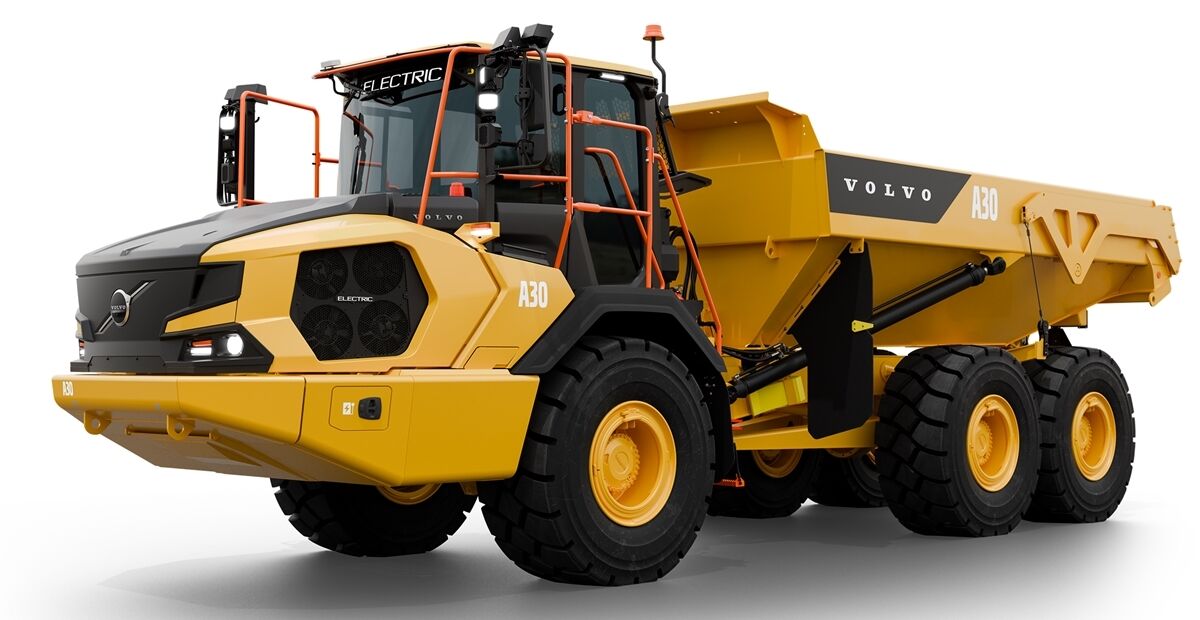
| Volvo | EC230 Electric | Track excavator | 23.0 | 264 | 8 | n/a / 10 | 380,000 |
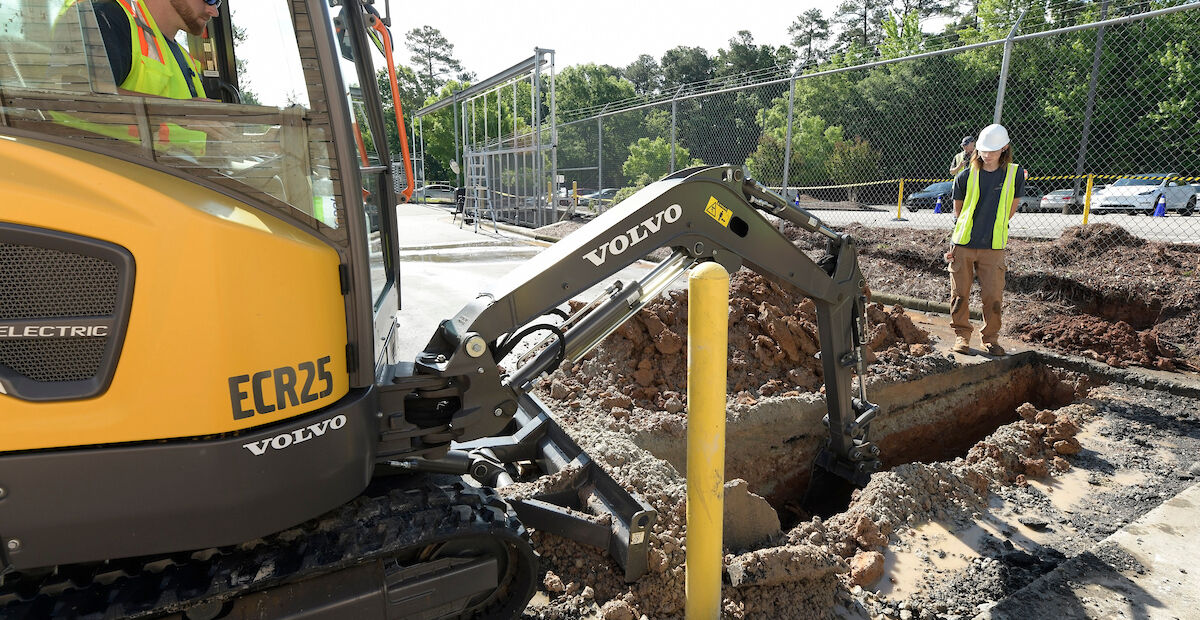
| Wacker Neuson | EZ17e | Mini excavator | 1.7 | 16.8 | 6 | 8 / 4 | 42,000 |
| JCB | 19C-1E | Mini excavator | 1.9 | 15 | 4 | 6 / 3 | 38,500 |
| Caterpillar | 301.9 VPS | Mini excavator | 1.8 | 18 | 7 | 9 / 4.5 | 44,000 |
| Wacker Neuson | WL20e | Wheel loader | 2.5 | 35 | 5 | 10 / 5 | 68,000 |
| Volvo | L25 Electric | Wheel loader | 4.8 | 70 | 6 | n/a / 8 | 125,000 |
| Mecalac | AS210e | Compact loader | 3.2 | 57 | 7 | 12 / 6 | 82,000 |
| Sennebogen | 817 E | Material handling | 17.0 | Cable-bound | unlimited | n/a | 220,000 |
| Hidromek | HMK 14 E | Mobile excavator | 14.0 | 130 | 6 | n/a / 8 | 175,000 |
Prices are net excluding VAT and excluding attachments. The Volvo EC230 Electric costs approximately 140 percent more than the diesel variant EC220E, which costs around 160,000 euros. The Mecalac e12 is 85 percent above the diesel counterpart 12MTX. For mini excavators, the markup shrinks to 45 to 55 percent. Wacker Neuson calculates a premium of 14,000 euros for the EZ17e compared to the 1404 with Kubota diesel.
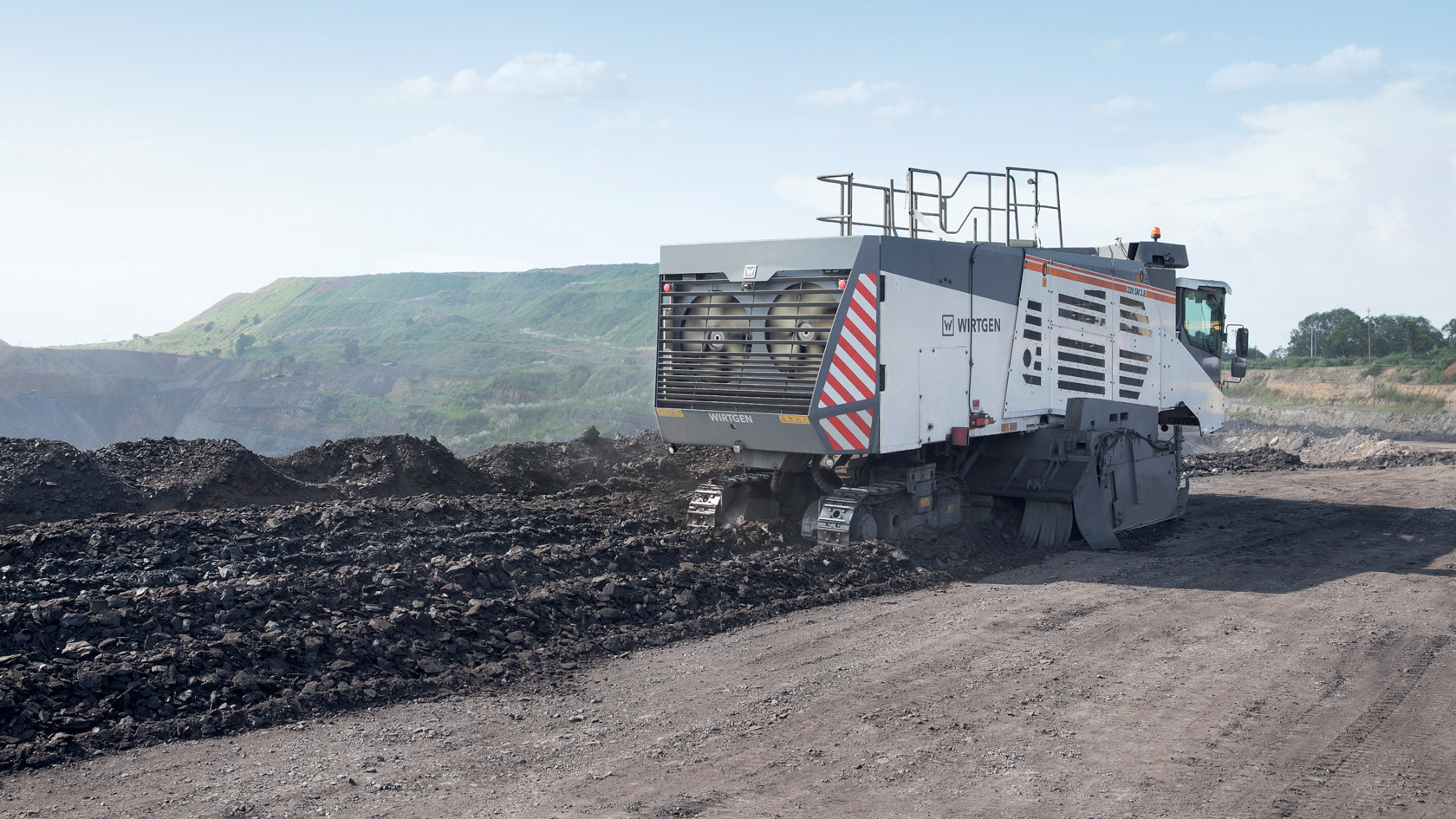
Delivery times in 2026 range between 8 and 16 weeks for standard models. Volvo quotes 22 to 26 weeks for the EC230 Electric, as the machines are manufactured to order. Sany announced the SY19E for the European market, but availability is unclear. Wirtgen is working on electric pavers, with series production planned for 2027.
Range and charging times: Reality vs. datasheet
Manufacturers specify operating times measured under ideal conditions. The Mecalac e12 should last 8 hours – this applies to continuous light operation without heating or air conditioning. In practice, this means: material transport on flat terrain, moderate temperatures around 15 degrees Celsius, no peak loads. A construction company from Munich tested the e12 over six months and documented: With excavation work involving frequent slewing and lifting of 800 to 1,200 kilograms, runtime drops to 5.5 to 6.2 hours. In winter at minus 8 degrees, capacity reduces by a further 18 percent, equating to 4.5 to 5 hours.
The 146 kWh battery capacity of the e12 is divided into usable storage and reserve. Mecalac specifies 132 kWh as usable capacity, with 14 kWh remaining as buffer. Average consumption under load is 22 to 26 kWh per hour. This means: With a fully charged battery, 5 to 6 hours are realistic before the machine must return to the charging station. A similarly-sized diesel excavator works 9 to 11 hours with a 60-liter tank.
Charging times are the second critical point. At a 230-volt household socket with 16 amperes, a full charge of the e12 takes approximately 14 hours. This works for machine pools that stand idle at night. On sites with two-shift operation, it becomes tight. A 400-volt three-phase line with 32 amperes reduces charging time to 6 to 7 hours. Volvo specifies a charging time of 10 hours at 400 volts for the EC230 Electric with 264 kWh – at 63 ampere protection. This corresponds to a charging power of approximately 44 kW.
Fast chargers with 50 kW DC can halve the time but cost 15,000 to 28,000 euros investment. Wacker Neuson offers an optional DC charger with 25 kW for the WL20e, which reduces charging time to 2.5 hours. The price: 8,400 euros net. This pays off with three machines in the pool. A construction company from Vorarlberg operates four WL20e and a shared 50-kW fast charger. The machines work in two shifts: mornings 4 hours, midday 1.5 hours recharging, afternoons another 3.5 hours. This works for material handling in equipment yards, but not for earthwork on changing construction sites.
Battery swap systems are still individual solutions in 2026. Sany tests the SY26E with two 15-kWh modules that can be swapped in 8 minutes. Cost per additional battery: 12,000 euros. With daily 10-hour deployment, three battery sets are needed – this increases investment by 24,000 euros. Charging downtime is eliminated. Volvo is working on a container swap system for the EC230 Electric, but details have not yet been published.
TCO comparison Electric vs. Diesel: Acquisition, electricity, maintenance, resale
Total Cost of Ownership (TCO) determines economic viability. A Wacker Neuson EZ17e costs 42,000 euros at acquisition, the comparable 1404 diesel 28,000 euros. Difference: 14,000 euros. At 1,200 operating hours annually over 7 years of useful life, the following costs apply:
| Cost item | EZ17e Electric (EUR) | 1404 Diesel (EUR) | Difference (EUR) |
|---|---|---|---|
| Acquisition | 42,000 | 28,000 | +14,000 |
| Energy 7 years (8,400 h) | 8,820 | 37,800 | -28,980 |
| Maintenance / Service | 4,200 | 8,400 | -4,200 |
| AdBlue | 0 | 1,680 | -1,680 |
| Repairs (Average) | 2,100 | 4,200 | -2,100 |
| Resale after 7 years | -10,500 | -7,000 | -3,500 |
| Total TCO | 46,620 | 73,080 | -26,460 |
The calculation is based on an electricity price of 0.35 euros per kWh (average commercial power DACH 2026) and a diesel price of 1.50 euros per liter. The EZ17e consumes 1.4 kWh per hour, the 1404 approximately 3 liters of diesel per hour. At 8,400 hours over 7 years, that is 11,760 kWh (4,116 euros) for electric and 25,200 liters (37,800 euros) for diesel. Maintenance costs for the electric excavator drop by approximately 50 percent: no oil changes, no diesel filters, no exhaust gas cleaning. Wacker Neuson calculates 600 euros annually for the EZ17e versus 1,200 euros for the 1404.
The resale value is still uncertain in 2026. Dealers pay approximately 25 percent of the new price for a 7-year-old EZ17e with 8,400 hours, around 10,500 euros. The diesel holds at 25 percent, or 7,000 euros. The difference lies in battery aging: After 8,000 to 9,000 hours, capacity drops to 75 to 80 percent. A replacement battery for the EZ17e costs 8,400 euros, which depresses resale value.
For larger machines, the calculation shifts. The Volvo EC230 Electric costs 380,000 euros, the EC220E diesel 160,000 euros. Over 7 years and 10,000 hours, energy costs are 92,400 euros (electric) versus 420,000 euros (diesel). Maintenance and repairs save an additional 60,000 euros. Nevertheless, it takes 4.5 to 5 years for this machine to reach break-even. For companies with short depreciation cycles of 3 years, diesel remains cheaper.
Subsidies change the TCO calculation. In Germany, the Federal Environmental Innovation Program (UIP) offers subsidies of up to 45 percent for electric construction machines in pilot projects. Austria offers up to 30 percent investment subsidies through Kommunalkredit Public Consulting (KPC). Switzerland promotes the ProKilowatt program with flat-rate contributions between 8,000 and 25,000 euros per machine. With subsidies, the acquisition difference for the Mecalac e12 reduces from 85,000 to 42,000 euros – break-even is then reached in 2.2 years.
Charging infrastructure on the construction site: Fast chargers, battery swaps, mobile transformers
A construction site with three electric machines requires at least 60 kW connection capacity if all charge simultaneously. The Mecalac e12 with its 400-volt charger at 32 amperes draws 22 kW, the Volvo EC230 Electric 44 kW. A standard construction power connection provides 63 amperes at 400 volts, thus maximum 44 kW. This suffices for one large or two small machines. Those needing more order a power distribution unit with 125 amperes – costs starting at 280 euros per month rental plus 150 euros connection fee.
Mobile transformers expand capacity. A 160-kVA transformer on trailer costs 1,200 euros per month rental and provides up to 110 kW at 400 volts. This allows five machines to charge in parallel. Liebherr is testing mobile fast-charging containers with 150 kW DC power on construction sites in Switzerland. These containers cost around 85,000 euros to purchase and are powered by a separate diesel generator – a compromise that reduces CO₂ emissions by approximately 60 percent but does not eliminate them.
Battery swap systems circumvent the charging problem but are expensive. Sany offers two 15-kWh modules for the SY26E that can be swapped in 8 minutes. Per additional module, 12,000 euros are incurred. With three machines and two additional batteries each, that means 72,000 euros investment. An Austrian construction company tested this system: Two operators can run four machines in two shifts without charging downtime. The third battery pack is permanently on the charger. The balance after 18 months: 4,200 operating hours per machine without downtime, but 22 percent higher fixed costs due to additional batteries.
Grid connections are often available in city centers but lacking in deep excavation on highways or in quarries. This is where buffer batteries come in. Volvo tests a 500-kWh container that charges during the day via a small diesel generator or photovoltaics and supplies construction machines at night. The system costs 120,000 euros but saves diesel and meets emissions regulations. A pilot project in Zurich uses such containers for nighttime track work – successfully, as noise limit values are met.
Hybrid as interim solution: Excavators and wheel loaders in everyday practice
Hybrid drives combine diesel and electric motors. Caterpillar has offered the 336 GC Hybrid since 2024, Komatsu the HB365LC-3. Both machines store braking energy in supercapacitors and release it during acceleration. Fuel savings range from 12 to 18 percent. A Caterpillar 336 consumes as a hybrid variant 16 liters per hour instead of 19 liters, which at 2,000 hours annually equals 6,000 liters or 9,000 euros savings. The hybrid technology premium is 35,000 euros – break-even is reached after 3.9 years.
Komatsu relies on a 165-kW diesel engine and a 55-kW electric motor in the HB365LC-3. The electric motor drives the hydraulic pumps when the machine slews or lifts. The energy comes from a 14-kWh lithium-ion battery that charges during travel or lowering the load. The machine weighs 36 tons and costs 420,000 euros – 38,000 euros more than the pure diesel variant PC360LC. In a field test over 12 months in Bavaria, the HB365LC-3 achieved an average consumption of 17.2 liters per hour during earthmoving, the PC360LC was 20.8 liters.
Wheel loaders particularly benefit from hybrid drives, as they perform many acceleration and braking operations. Liebherr offers the L 566 H as a hybrid wheel loader. The machine uses a diesel-electric drivetrain: The 180-kW diesel engine drives a generator that powers electric motors on the axles. During braking, energy is recovered and stored in an 8-kWh battery. Consumption drops 20 to 25 percent compared to the conventional L 566 XPower. Liebherr calculates 22 liters per hour for the hybrid versus 28 liters for diesel. At 2,500 hours annually, that is 15,000 liters or 22,500 euros savings. The premium is 68,000 euros – break-even after 3 years.
Hybrids are a bridge technology in 2026. They meet no zero-emissions requirements but reduce operating costs and CO₂ emissions. For companies working in city centers but not yet ready to switch to pure electric machines, they are an option. Maintenance costs run about 10 percent above diesel machines, as both combustion engine and electric motor and battery require servicing. Wacker Neuson has stopped hybrid development and concentrates on pure electric or diesel models – the reason given: hybrids are too expensive and too complex for mid-sized businesses.
Hydrogen: Pilot projects by JCB, Liebherr, Komatsu
Hydrogen construction machines are still prototypes or small series in 2026. JCB was the first manufacturer to present the 220X with hydrogen combustion engine. The machine uses a 4-cylinder engine with 74 kW that burns hydrogen directly – no fuel cell. The tank holds 10 kilograms of H₂ at 350 bar, sufficient for 4 to 5 hours of operation. JCB has built 50 units and tests them in the UK and USA. A commercial version should be available by late 2026, price: around 280,000 euros. That is 75 percent more than the diesel 220X.
Liebherr follows a different path. The company is developing a hydrogen ecosystem for construction sites together with MAN and Daimler Truck. Since January 2026, a hydrogen refueling station stands in Bischofshofen, Austria, producing H₂ on-site via electrolysis. Liebherr tests a prototype of the R 9200 E there, which operates with a fuel cell. The machine weighs 220 tons and is deployed in open-pit mining. The fuel cell provides 500 kW continuous output, a 150-kWh battery buffers peak loads. The tank holds 80 kilograms of H₂, sufficient for 8 to 10 hours. Costs: not yet published, estimated over 2 million euros.
Komatsu is working on a fuel cell variant of the PC200. The prototype was unveiled in Japan in 2025, European tests begin 2027. The machine uses two 60-kW fuel cells from Toyota and a 40-kWh battery. The hydrogen tank holds 12 kilograms at 700 bar. Komatsu specifies a runtime of 6 to 7 hours. The advantage over electric: Refueling takes 8 minutes instead of several hours charging. The disadvantage: Hydrogen costs between 12 and 16 euros per kilogram in the DACH region in 2026. For 6 hours operation, energy costs amount to 144 to 192 euros – diesel costs 120 euros, electric excavator costs 30 euros.
Infrastructure is lacking. Germany had around 120 hydrogen refueling stations for passenger cars in 2026, of which 8 are designed for heavy commercial vehicles. Liebherr, MAN and Daimler Truck are building a pilot facility in Bischofshofen producing 200 kilograms of H₂ daily. This suffices for 16 excavators or 10 trucks. Facility costs: 4.2 million euros. For nationwide supply, thousands of such stations would need to be built – unrealistic by 2030. Sennebogen tests hydrogen fuel cells in port mobile cranes, Wirtgen examines use in pavers. Both manufacturers name 2028 as the earliest date for series production.
Subsidies 2026: SME Innovation, Climate and Transformation Funds
Germany promotes electric construction machines through several programs. The Federal Ministry for Economic Affairs and Climate Action (BMWK) offers subsidies of up to 45 percent through "SME Innovation" for emission-free construction machines. Requirement: The machine must be deployed in a pilot project that is documented and evaluated. Maximum subsidy per machine is 200,000 euros. An example: A construction company buys a Volvo EC230 Electric for 380,000 euros and receives 171,000 euros subsidy. Net investment drops to 209,000 euros – only 31 percent above diesel.
The Climate and Transformation Fund (KTF) supports investments in low-carbon technology. Construction companies can apply for subsidies of 25 to 35