Skip to content
Liebherr — Company profile
Manufacturers

Liebherr

Global leading manufacturer of construction machinery and cranes

SchweizFounded 194954.728 Employeesliebherr.com
open_in_newOfficial resources

Direct Liebherr resources

categoryPortfolio

Liebherr business segments

Liebherr was founded in 1949 by Hans Liebherr in Kirchdorf an der Iller in southern Germany. The founding idea was the development of the first mobile tower crane — a product tailored to the reconstruction needs of the post-war years, which later established the company as the global market leader in cranes. The official group headquarters was subsequently relocated to Switzerland; the operational history and most of the plants remain concentrated in Germany, particularly in the southern German region.

The company is in its second generation of family leadership. The president of the Administrative Board is Jan Liebherr, and the vice-president is Stéfanie Wohlfarth. This family stewardship is unusually stable in an industry shaped by activist-driven M&A, private-equity consolidation and shifting corporate strategies. For customers, suppliers and distribution partners, the family structure implies predictable, long-term investment and product decisions — not least in the current powertrain transition, where bets on individual technologies (battery-electric, hydrogen, hybrid) require 10+ year time horizons.

Liebherr currently employs around 54,728 people across more than 140 sites worldwide. The company thus ranks among the largest family businesses in Europe and among the top five global construction-equipment manufacturers. Revenue has grown from 11.75 billion EUR in 2019 to 14.62 billion EUR in 2024 — growth of more than 24 percent within five years, though 2020 saw a pandemic-driven dip to 10.34 billion EUR, followed by steady recovery.

What structurally sets Liebherr apart from most competitors is its exceptionally high vertical integration. Not only are the classic machine divisions (earthmoving, cranes, mining, concrete technology, maritime cranes, special foundation engineering) developed and manufactured in-house — the central components such as hydraulic systems, diesel engines (in Bulle in Switzerland and Colmar in France) and control electronics are also developed in-house. This depth provides the group with a cost advantage on standard machines and an innovation edge on complex systems, because powertrain, hydraulics and software can be developed in a coordinated way. At the same time, the group is significantly more diversified than pure construction-equipment competitors through its Aerospace division (landing gear and flight controls for Airbus and Boeing) and its home-appliance division.

Our editorial team covers Liebherr continuously and documents relevant market developments, product launches (bauma presentations, pre-series programmes, field tests) and strategic moves across 14 editorial articles. This profile page bundles the most B2B-relevant information into four thematic areas: Company, Financials & Brand, Portfolio & Sites (the eight business areas in detail), and Innovation & Trends (powertrain roadmaps, LiDAT/LiPOS digital strategy, hydrogen research, autonomous mining trucks).

timelineTimeline
  1. 1949
    Founded — Schweiz
  2. 2019
    Revenue: 11.75 Mrd. EUR EUR
  3. 2024
    Current: 14.62 Mrd. EUR EUR · 54.728 employees

Company History

Liebherr was founded in 1949 by Hans Liebherr in Kirchdorf an der Iller in Swabia. With the development of the first mobile tower crane, he laid the foundation for one of Europe's largest family businesses. Today the company is run by the second generation of the Liebherr family and employs over 54,000 employees worldwide at more than 140 locations.

Financial Metrics

As a family business, Liebherr publishes an annual business report, but does not disclose detailed profit margins.

Revenue Development (Billion EUR)
2020: 10.3 · 2021: 11.6 · 2022: 12.6 · 2023: 14.0 · 2024: 14.6 (Record)

Employees: 54,728 (End of 2024)
R&D Investments: > 800 million EUR annually
Production Sites: > 140 worldwide

Revenue has grown by more than 40% over the past five years. Liebherr invests over 800 million euros annually in research and development — one of the highest R&D ratios in the industry.

Between 2019 and 2024, Liebherr's reported revenue grew from 11.75 to 14.62 billion EUR — a gain of +24.4 percent over five years. The trajectory was not linear: the pandemic year 2020 saw a dip to 10.34 billion EUR, followed by steady recovery in 2021 (11.64), 2022 (12.59), 2023 (14.04) and the record 2024 value. In parallel, headcount grew from 48,926 (2020) to 54,728 (2024) — around +11.9 percent. This combination of operational and personnel growth under family ownership points to a long-term investment logic: rather than margin optimisation through headcount reduction, the group invested in growth, capacity and workforce.

R&D spend is more than 800 million EUR annually — roughly 5.5 percent of 2024 revenue. This is among the highest R&D ratios in the construction-equipment sector and clearly above what listed competitors of similar size report. The reason is the vertical integration: Liebherr develops not only vehicles but also hydraulic components, diesel engines and control electronics in-house — and must therefore innovate across multiple technology fields in parallel.

As a family business, Liebherr publishes an annual report but does not disclose detailed profit margins or segment-level figures. For sourcing and competitive comparisons this is a limitation: competitors such as Caterpillar, Komatsu or Volvo CE publish quarterly numbers with segmented reporting from which EBIT margins and CapEx ratios can be read granularly. At Liebherr, comparable inferences are only possible indirectly — from the published revenue time series and industry benchmarks.

For B2B decisions, brand perception is particularly relevant: in mobile cranes, Liebherr reports a European market share of over 50 percent — a very strong position that can command price premium in tenders because the LTM reference is a de-facto standard for many customers. In tower cranes, Liebherr is the global market leader. In mining excavators and haul trucks (T 264, T 284), the group ranks among the top global providers alongside Caterpillar, Komatsu and Hitachi Construction Machinery.

The residual-value trajectory of Liebherr machines in the used-equipment market is generally considered stable — both for smaller Generation 8 hydraulic excavators and for tower and mobile cranes. For rental operators and fleet managers this is an important TCO factor, because a high residual value reduces the depreciation burden and makes leasing or resale models more attractive. Our coverage regularly documents tender trends and comparisons with direct competitors in each segment.

Revenue 2024
14.62 Mrd. EUR EUR
Growth
+24.4%
20192024
Employees
54.728
Ownership
Familienunternehmen (Familie Liebherr)

Product Divisions Overview

Earthmoving

Hydraulic excavators (crawler excavators from 20 to 800 tonnes, mobile excavators), wheel loaders, dozers, telescopic handlers and dump trucks. Liebherr Generation 8 excavators set standards for fuel efficiency and operator comfort. In particular, large excavators in the R 9000 to R 9800 class dominate the mining segment.

Cranes

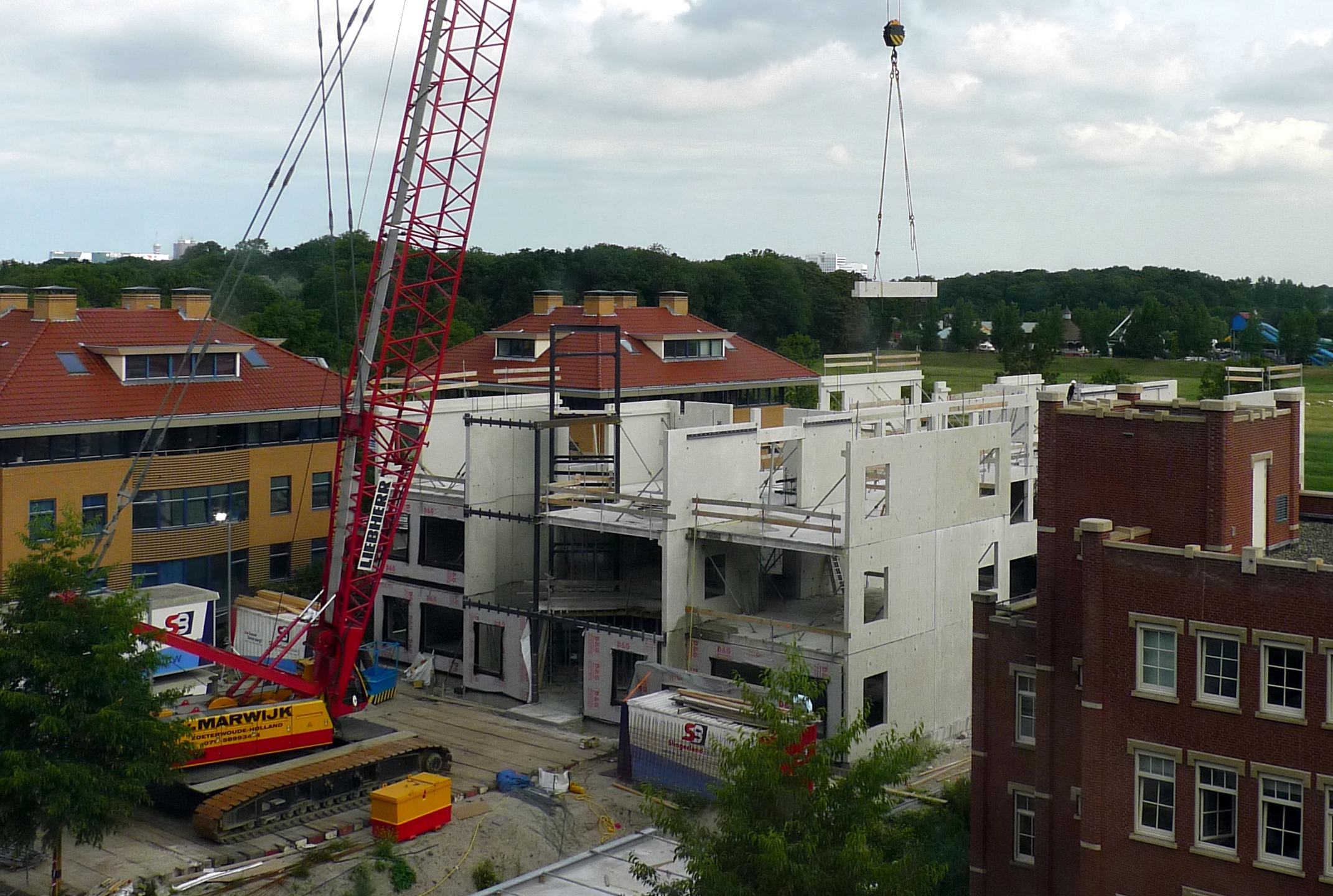
Liebherr is the world's largest manufacturer of mobile cranes and tower cranes. The product range includes mobile cranes with load capacities from 35 to 1,200 tonnes (LTM series), crawler cranes up to 3,000 tonnes (LR series) as well as top-slewing and bottom-slewing tower cranes. The LTM 11200-9.1 is the world's most powerful mobile crane.

Concrete Technology

Truck mixers, concrete pumps and concrete technology components. The truck mixer division was modernized in 2024 with new lightweight drums.

Maritime Cranes & Port Technology

Port mobile cranes (LHM series), ship cranes, offshore cranes and container handling cranes. Liebherr Maritime, headquartered in Rostock, is one of the world's leading providers of port handling equipment.

Mining

Hydraulic excavators in the 100 to 800 tonne class, dump trucks (T 264, T 284) and drilling rigs. The mining division is growing strongly due to global demand for raw materials for the energy transition.

Other Divisions

Specialized deep foundation equipment, aerospace components (landing gear, flight controls for Airbus and Boeing), gear technology, automation and household appliances. This diversification makes Liebherr unique in the industry.

Market Position

Liebherr ranks among the top 5 construction machinery manufacturers worldwide. In Europe, the company holds a market share of over 50% in mobile cranes. In tower cranes, Liebherr is the global market leader. The degree of vertical integration — from hydraulic components to diesel engines to electronics — is unusually high and gives Liebherr a cost advantage over competitors who outsource components.

Liebherr's innovation roadmap addresses the construction-equipment industry's three key transitions in parallel: electrification, hydrogen and autonomy/digitalisation. Unlike pure vehicle OEMs, Liebherr can develop powertrain concepts across the entire stack — from the cell through the inverter to the operator software — in a coordinated way, thanks to in-house engine and hydraulic development. This is reflected in an unusually broadly positioned technology pipeline.

In electrification & battery technology, Liebherr operates several series and pre-series programmes. A prominent example is the battery-electric LB 16 unplugged drilling rig for special foundation engineering, which has been in the field for several model years. The largest electrification order in the company's history was signed in September 2024 with the Australian mining group Fortescue: 475 zero-emission machines, including 360 autonomous battery-electric T 264 haul trucks. This order is industry-wide a landmark because it shows battery-electric haul trucks being ordered at mining scale — not just in pilot programmes.

In parallel, Liebherr is researching hydrogen combustion engines as an alternative to batteries for heavy machines with long operating times. The in-house engine development in Bulle (Switzerland) and Colmar (France) is working on H2 concepts for mining trucks and large hydraulic excavators. The advantage of the hydrogen combustion engine over the fuel cell lies in lower cost complexity and better tolerance for contaminated site conditions — technical maturity, however, is not yet at series level.

In autonomous driving & machine control, Liebherr offers the Autonomous Haulage System (AHS) in mining — a platform for driverless haul trucks. The T 264 can operate fully autonomously in open-pit mining. In earthmoving, Liebherr focuses on semi-autonomous functions such as automatic grading and GPS-based machine control via the in-house LiPOS platform.

Digitalisation is bundled via the telematics platform LiDAT, which enables real-time monitoring of machine fleets. Via the customer portal MyLiebherr, customers access documentation, spare-parts ordering and service requests. Predictive maintenance is being progressively integrated into control systems. For fleet operators, compatibility with common telematics standards (ISO 15143-3 / AEMP 2.0) is provided through LiDAT — an advantage over manufacturers with proprietary closed formats.

Our editorial team follows the Liebherr innovation roadmap continuously — from press releases via bauma presentations and field tests through to assessments of published field data. All the group's future statements are evaluated in our coverage against series machines already delivered and against the roadmaps of Caterpillar, Komatsu, Volvo CE and Hitachi CM.

Trend Topics & Future Strategy

Electrification & Battery Technology

Liebherr is developing battery-electric drives for several machine classes. The LB 16 unplugged is a drilling rig with battery-hybrid drive for specialized deep foundation work. In the mining sector, the largest order in the company's history was signed in September 2024: 475 zero-emission machines for Australian mining company Fortescue, including 360 autonomous battery-electric dump trucks of the T 264 type.

Hydrogen

Liebherr is researching hydrogen combustion engines as an alternative to batteries for heavy machinery. The in-house engine development in Bulle (Switzerland) and Colmar (France) is working on H2 concepts for mining trucks and large hydraulic excavators.

Autonomous Driving & Machine Control

In mining, Liebherr offers an Autonomous Haulage System (AHS) platform for driverless dump trucks. The T 264 can operate fully autonomously in open-pit mines. In the earthmoving sector, Liebherr relies on semi-autonomous features such as automatic grading functions and GPS-guided machine control (LIPOS).

Digitalization

The telematics platform LiDAT enables real-time monitoring of machine fleets. Through MyLiebherr, customers have access to documentation, spare parts orders and service requests. Predictive maintenance is being gradually integrated into control systems.

All Manufacturers