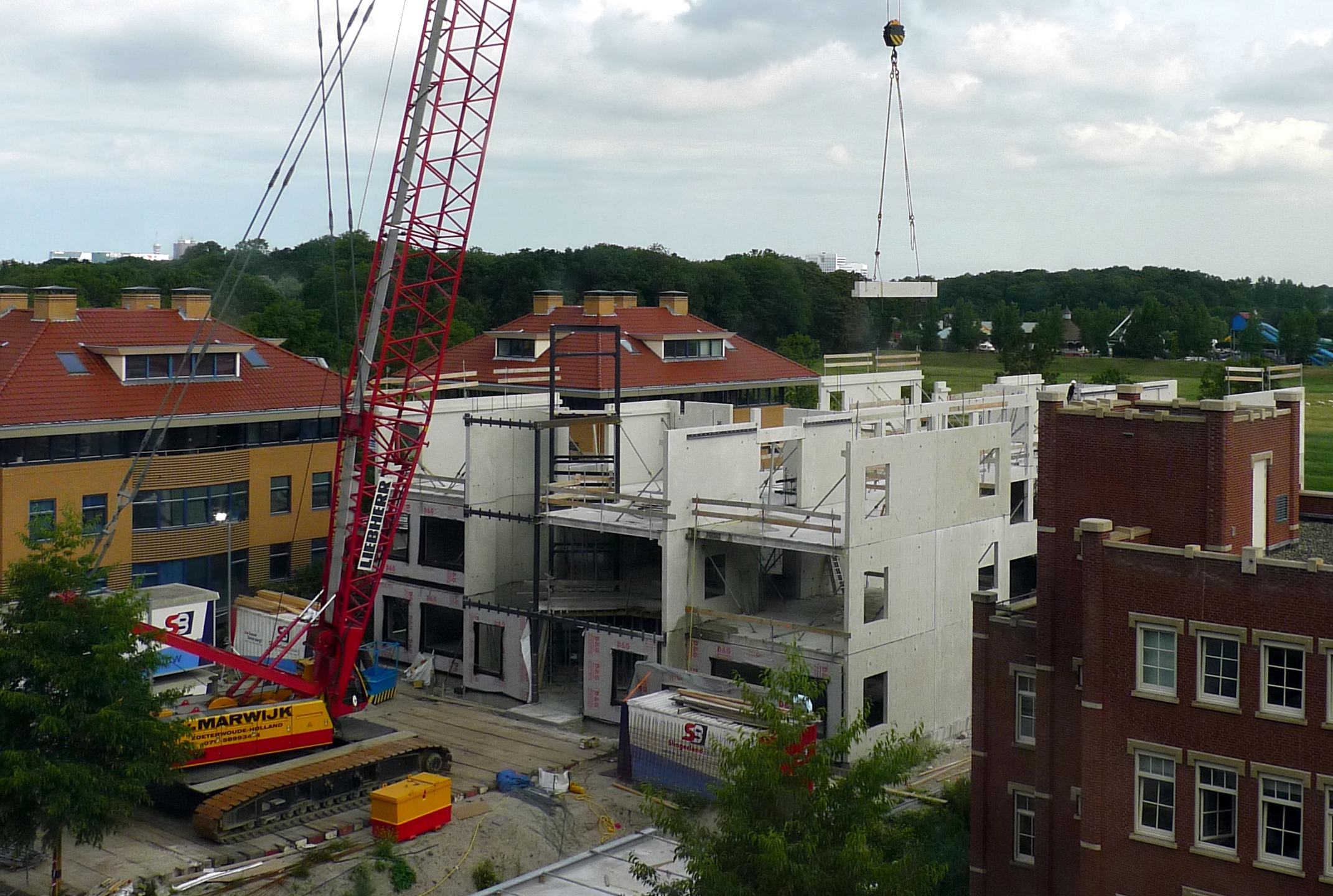
Germany's Jandt Kranvermietung GmbH has ordered its first mobile crane in the 400-tonne class, a Liebherr LTM 1400-6.1, marking a strategic push into heavy lifting for infrastructure, energy-transition projects and power-line erection. The six-axle mobile crane – Jandt's first 6-axle machine – joins a fleet previously topped by two LTM 1250-5.1 mobile cranes and two MK 140-5.1 tower cranes, significantly expanding the family-owned firm's lifting capacity and eliminating the need to sub-hire equipment for higher-tonnage jobs.
Why Jandt stepped up to the 400-tonne class
"With this move into a larger crane class, we are sending a clear signal about our corporate development and, of course, paying tribute to market requirements," explains Jens Lübeck, one of two managing directors at Jandt Kranvermietung. "With ever-increasing loads, we have reached the limits of our current fleet in some areas and could only fulfil project requirements together with our partner companies. So this step is a logical consequence for us and our customers. In future, we want to move more."
The decision reflects a broader trend in Germany's crane market: as wind-turbine components, infrastructure modules and industrial plant elements grow heavier, rental fleets must scale up or lose business to larger competitors. For family-owned companies like Jandt – which traces its roots to haulage and excavation work in 1950 and was re-founded in 1998 under second-generation ownership – the investment represents both a defensive move to retain existing clients and an offensive play to win contracts previously out of reach.
Compact design and quick-coupling system drove purchase decision
Three factors tipped Jandt's choice toward the LTM 1400-6.1: compact dimensions for a 400-tonne machine, high load capacity, and self-assembly of the Y-guying system. Liebherr engineered the telescopic-boom Y-guying on the LTM 1400-6.1 to significantly reduce rigging time and improve safety during set-up. Fewer assembly steps mean less work at height; secure access platforms, simplified mounting sequences and Liebherr's automatic LIKUFIX coupling system further protect operators.
"We really like the system with the quick couplings, which can significantly reduce set-up times," says Sven Diercks, who oversees technical operations as co-managing director. "With the LTM 1400-6.1 we can realise jobs with high loads more flexibly and with shorter lead times."
Speed matters on high-value projects where a day's delay cascades through the schedule. For a rental house, quicker rigging also means more billable days per year per machine – a critical return-on-investment metric in a capital-intensive segment.
Target sectors: infrastructure, energy transition, power-line construction
Jandt expects the new crane to open or deepen its presence in four sectors:
- Industrial projects – heavy plant modules, reactor vessels, generator sets
- Infrastructure – bridge segments, precast elements for rail and road projects
- Energy-transition construction – wind-turbine assembly, battery-storage installations, hydrogen infrastructure
- Power-line construction – lattice masts, conductor bundles, transformer stations (an area where Jandt already operates)
"Because we are already active in very many areas and have had to rent cranes of this size class in the past, we are particularly looking forward to the new areas of application," Lübeck notes. The firm declined to publish hard financials, but industry sources estimate that sub-hiring a 400-tonne crane for a typical week-long job can cost €15,000–25,000 depending on travel distance and rigging complexity – expense that now flows back as internal margin.
Long partnership with Liebherr underpins repeat order
The choice of Liebherr rests on three pillars, according to Lübeck: innovation capability, a long-standing partnership, and high service standards. "The innovative strength of Liebherr, as well as the long-standing partnership and the high level of service, once again convinced us to buy a product from Liebherr," he says. "The extremely economical operation of the Liebherr machines was another purchase argument."
Fuel economy and service intervals directly affect total cost of ownership. In crane rental, where machines rack up highway kilometres shuttling between sites and idle hours waiting for weather or permits, operational efficiency can swing a business case by several percentage points. Liebherr's emphasis on quick-coupling and self-rigging features also reduces labour cost – a factor increasingly important as skilled riggers remain in short supply across German-speaking markets.
Jandt's fleet profile and market position
Jandt operates 18 mobile cranes and four loader cranes, plus four Liebherr mobile construction cranes: two MK 140-5.1 and two MK 88-4.1 models. The firm specialises in industrial and warehouse construction, where compact footprints and high hook heights suit tight urban sites. By adding the LTM 1400-6.1, Jandt can now bid on turnkey lifting packages that previously required a consortium approach or yielded margin to a larger competitor.
The company is family-run across two generations, with a third generation already preparing to step in. This continuity – rare in an era of private-equity roll-ups – allows for longer investment horizons and closer customer relationships, two advantages in a market segment where project references and operator skill matter as much as machine spec sheets.
Market context: growth in the 400-tonne class
Germany's mobile-crane market has seen steady upward migration in tonnage classes over the past decade. Wind-energy projects alone have driven demand for 500-tonne-plus machines; the knock-on effect is that 300–400-tonne cranes, once reserved for exceptional lifts, now handle routine industrial work. Fleet operators who fail to keep pace risk being squeezed out of the most lucrative contracts.
At the same time, rental rates for heavy cranes have firmed as utilisation improved post-pandemic and supply-chain delays lengthened lead times for new equipment. Industry data suggest average utilisation for 300-tonne-plus cranes in Western Europe approached 70 per cent in 2025, up from the low 60s in 2022, making new capacity investments financially viable for well-positioned regional players like Jandt.
Related reading: Jandt erweitert Kranflotte mit Liebherr LTM 1400-6.1: Einstieg in die 400-Tonnen-Klasse | Centro Oeste nimmt ersten Liebherr LTM 1300-6.4 mit LICCON3 in Brasilien in Betrieb
Outlook: implications for regional crane markets
Jandt's move into the 400-tonne class signals a broader recalibration among mid-sized German crane rental firms. Those with strong regional footholds and deep customer relationships can justify capital outlays that would strain smaller, undifferentiated fleets. At the same time, the trend underscores the importance of OEM partnerships: Liebherr's quick-coupling technology and self-rigging features reduce the skill premium required to operate heavy iron, widening the pool of qualified operators and lowering insurers' risk assessments.
For equipment buyers and fleet managers, the lesson is clear: as project loads rise, the cost of not owning the right capacity – measured in lost bids, sub-hire expense and customer attrition – can exceed the cost of a new machine. Jandt's investment reflects that calculus and positions the firm to capture a larger share of Germany's growing infrastructure and energy-transition workload over the next decade.
For more on mobile-crane technology and fleet strategy, see our application guide to mobile cranes for urban logistics and our explainer on load-moment calculation for cranes and telehandlers.
Liebherr
Global leading manufacturer of construction machinery and cranes
This article was created with AI assistance and editorially reviewed.


